Powering Bitcoin Mining at Home Without Surprises
Bitcoin miner power consumption matters a lot the second you plug a miner into a wall outlet at home. One small box running 24/7 can warm a room, bump your bill, and trip a breaker if you are not ready. When the weather cools and heaters, lights, and holiday gear start to pull more power, it becomes even more important to know what your miner is really doing.
Our goal here is simple: help you understand how many watts a miner uses, what that means for your power bill, and how it fits on normal home circuits, so you can pick hardware that actually works in your house.
If you already know you want a compact solo or lottery miner, you can skip ahead and start with home‑friendly options like Bitaxe and NerdQaxe class miners, which are designed to run on standard outlets and fit normal rooms. Use this guide to confirm they fit your power, noise, and heat budget before you buy.
The Basics of Bitcoin Miner Power Consumption at Home
When a miner says it uses a certain number of watts, that is how much power it draws while running. If a miner is rated at 200 watts, it is pulling about 200 watts all day and night when it is on.
To turn that into cost, you can use three basic steps:
- Divide the miner watts by 1000 to get kilowatts
- Multiply by the number of hours it runs
- Multiply by the price per kilowatt-hour from your power bill
So a 200-watt miner is 0.2 kilowatts. If it runs 24 hours, that is 0.2 × 24 kilowatt-hours for a day. Then you apply your local rate. Many people forget that miners do not cycle like a toaster; they usually run nonstop.
Home wiring adds another layer. Common North American circuits are:
- 15-amp breakers at 120 volts
- 20-amp breakers at 120 volts
For a continuous load like a miner, the usual rule is to stay around 80 percent of that breaker rating. That helps keep wires, outlets, and breakers from getting stressed by something that never shuts off. So a 15-amp circuit should not carry more than about 12 amps of steady load, and a 20-amp circuit should stay around 16 amps.
Seasonal changes matter too. In fall and winter, cooler air helps your miner run a bit happier. Fans do not have to work as hard, and rooms start cooler. But heaters, space heaters, and holiday decorations often share the same circuits. A circuit already feeding a heater, TV, and PC may not have much room left for a miner before the breaker starts to trip.
If you already know your rough power budget, you can start narrowing down to compact miners that stay under that limit while still giving you a useful hashrate. SaberShore's focus on home-friendly solo and lottery miners makes it easier to match miner size to what your wiring can actually support.
Matching Miner Size to Your Home Power Setup
Compact solo and lottery miners are designed to fit normal home life. They often pull in the range of a small appliance, from a few dozen watts to a few hundred watts. Full-size ASICs can use several thousand watts, more like a small electric dryer running non-stop.
That power draw shows up as:
- Noise: bigger ASICs use loud, high-speed fans
- Heat: more watts means more heat dumped into the room
- Ventilation needs: large rigs often need ducting or a very open space
In a bedroom or office, a compact miner is usually much easier to live with. You still hear the fan, and the room warms up, but it feels more like a strong PC under load. A big ASIC in that same room will feel like a leaf blower and space heater combined, which many people regret fast.
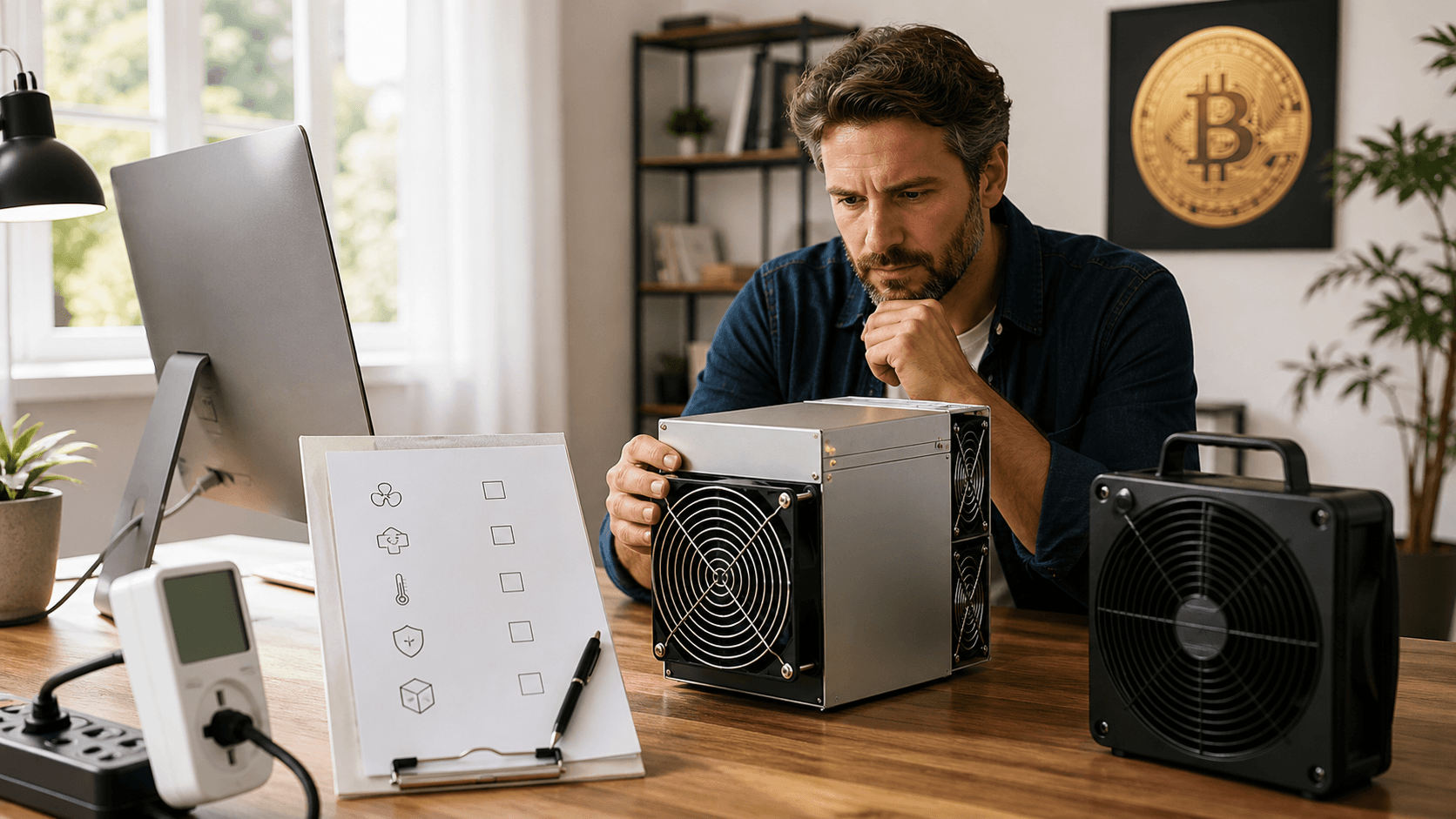
A simple planning checklist helps a lot:
- Figure out which outlets share the same breaker
- Add up the other things already plugged into that circuit
- Decide where some extra heat would be welcome, like a spare room or basement
- Choose a spot that can handle fan noise without driving you crazy
For example, running a compact Bitaxe- or NerdQaxe-style miner on a standard 120-volt circuit is usually no problem if that circuit is not already full. You treat the miner like a small always-on appliance. A large multi-kilowatt ASIC, on the other hand, may push you into 240-volt power, special outlets, and a space that can handle a lot of heat and noise.
Once you have a rough idea of how many watts you can safely support on a circuit, look at compact miners that keep you under that continuous load. SaberShore typically highlights in-stock Bitaxe and NerdQaxe class miners for this use case; when a given model is sold out, you can either choose a comparable in-stock alternative or sign up for restock notifications so you are ready when it comes back.
Calculating Your Real Mining Cost Before You Buy
Before picking hardware, it helps to set a simple power budget in your head. Start by finding the kilowatt-hour rate on your power bill. Some areas have a flat rate, others use time-of-use pricing where power is cheaper at night, or tiered rates where heavy use costs more.
Take the miner watt rating from the spec sheet and do:
- Watts ÷ 1000 = kilowatts
- Kilowatts × 24 = daily kilowatt-hours
- Daily kilowatt-hours × 30 = rough monthly usage
- Monthly usage × your rate = rough monthly cost
Home hobby miners usually care more about learning, supporting the network, and having a fun project than squeezing every last bit of short-term profit. So it often makes sense to ask, what am I comfortable spending on power each month, and which miners fit under that line?
Some helpful habits many home miners use:
- Set a monthly power target and work backward to miner size
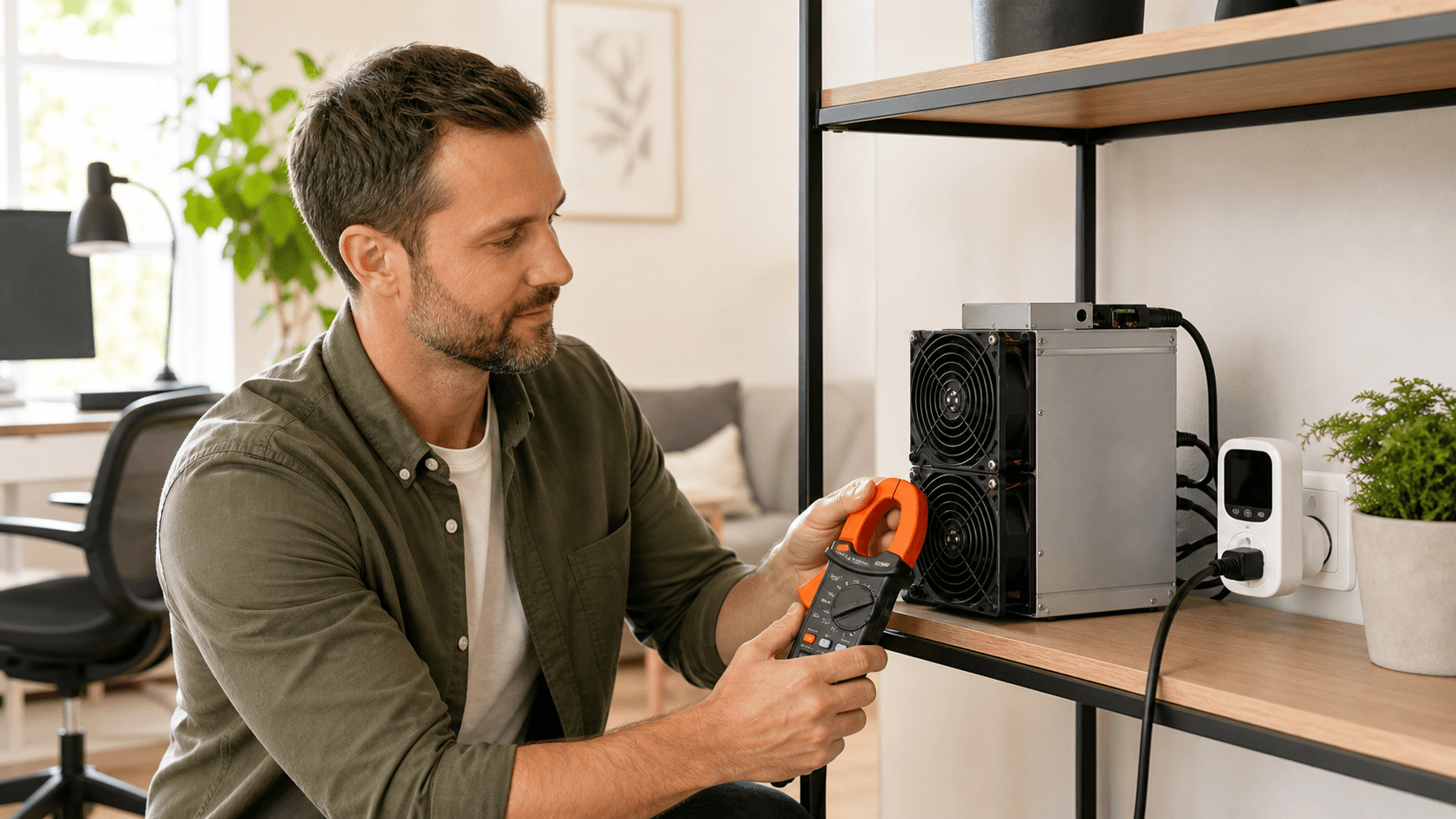
- Use smart plugs or power meters to see real-world draw
- Compare hashrate per watt, not just total hashrate
- Give yourself a little buffer in the budget in case rates change
Picking compact miners with predictable, modest draw helps you keep control over both heat and cost. Accessories like smart plugs and basic power meters make it much easier to confirm that your miner is doing what the label says and not more.
Once you have this number, you can go back to specific models and ask, "Am I comfortable paying roughly this much per month for this hashrate?" If the answer is yes, you are in the right range. If not, drop down a size or look at a more efficient compact miner.
Safe Wiring, Cooling, Noise Control, and Common Questions
Safety should always come first with continuous loads. Extension cords, power strips, and daisy-chained adapters can be risky if they are not rated for the load. Many are fine for a lamp or phone charger, but not for a device that runs hard all day. If you are pushing toward the limits of a circuit, it is wise to talk with a qualified electrician about dedicated circuits or upgrades instead of guessing.
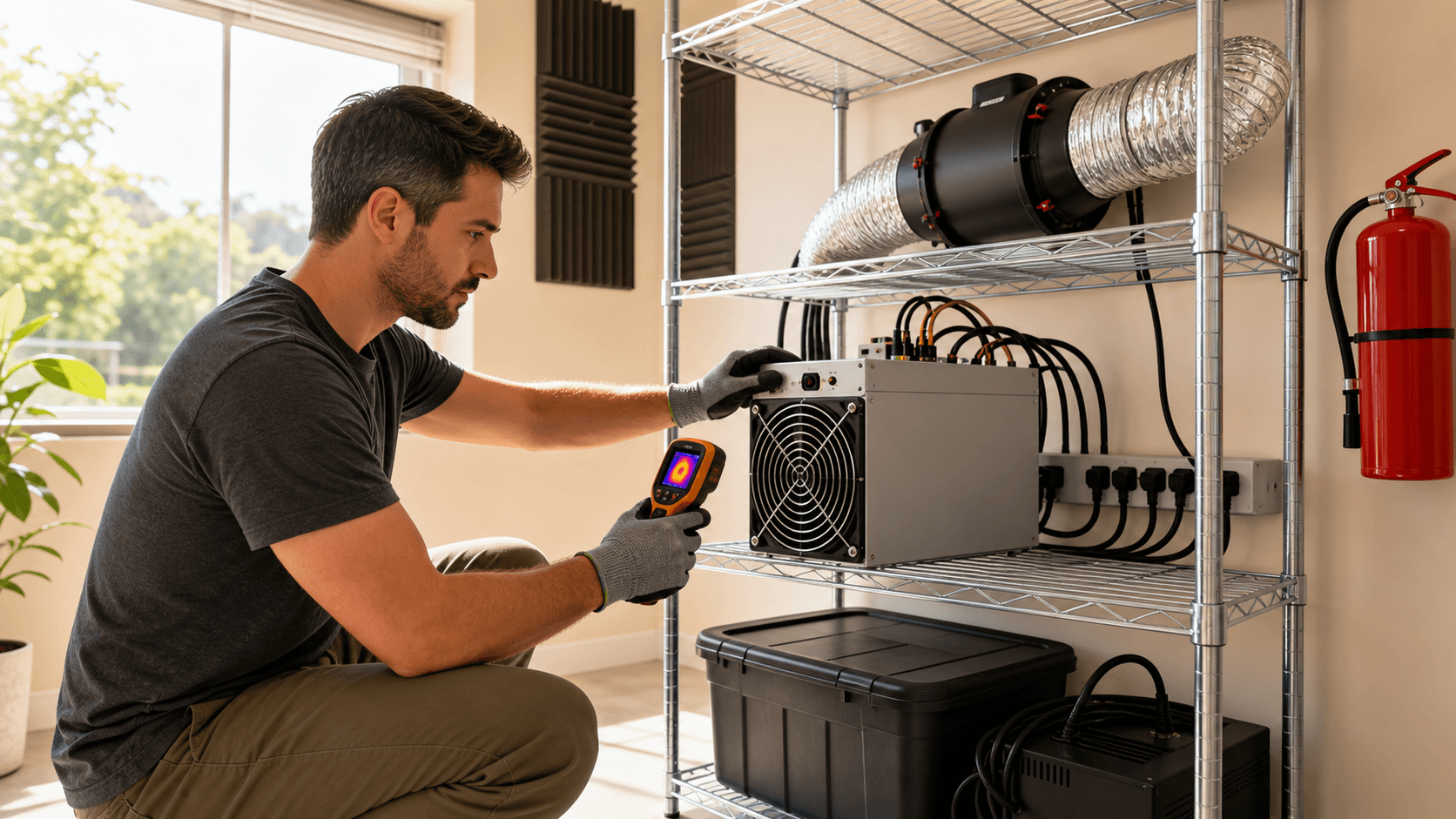
Heat and airflow are the next big topics:
- Even compact miners will warm a closed room over time
- Open doors, simple desk fans, or window airflow can help move hot air out
- In cold seasons, some people direct warm miner air into cooler parts of the home
- Avoid pulling in damp outdoor air without thinking about moisture and dust
On noise, compact miners vary, but many are in the same range as a strong PC or small server. Full-size ASICs are much louder and often belong in a garage or basement if they are used at all in a home. Any noise box or closet setup needs plenty of fresh air so you do not trap heat and cause the miner to throttle or fail.
FAQ: Home Mining and Power
Here are quick answers to common home mining power questions buyers often ask before they order:
- Can I run a miner on the same circuit as my PC or gaming setup?
Yes, as long as you respect the breaker rating and stay under a safe continuous load. If you notice warm outlets, flickering lights, or nuisance trips, that is a sign the circuit is loaded too high and needs to be adjusted.
- Will a compact miner make my power bill skyrocket?
It depends on your rate and runtime. Use the watts-to-kWh method to get a clear estimate before you plug anything in. Many buyers are surprised how manageable a 50- or 200-watt miner looks once they run the numbers.
- Is it safe to run a miner 24/7 at home?
It can be, if the circuit is sized correctly, the wiring and outlets are in good shape, and the miner has enough airflow to keep temps under control.
- Do I need 240-volt power for a home miner?
Not for compact solo and lottery miners that are built for standard 120-volt outlets. Larger, multi-kilowatt ASICs often work better on 240-volt circuits, which should be handled by a qualified electrician.
- Can I use fall and winter cold air to cool my miner?
Yes, many people take advantage of colder outdoor air by placing miners near windows or in cooler rooms, while watching for moisture, dust, and safe routing of cables.
If you are unsure which miner class fits your wiring and budget best, start by narrowing down to the wattage range you are comfortable with, then compare specific models and accessories.
Choosing the Right Miner Type for Your Power and Goals
Solo and lottery mining with compact miners is a good match for limited home power. You are not trying to compete with full industrial farms on raw hashrate. Instead, you run a small, steady device, keep your power use under control, and accept that rewards can be rare and random, more like a long-term ticket than a daily paycheck.
When deciding between miner types, it helps to ask:
- How much noise can my home handle?
- How much extra heat do I want, and where?
- What monthly power use feels reasonable to me?
A low-watt solo miner can make more sense than a large ASIC in many homes, simply because it fits normal circuits and daily life. Some people prefer several compact miners spread across different rooms or circuits instead of a single very large unit. This can spread heat out and reduce how loud any one spot becomes.
There are a few broad categories of hardware:
- Industrial ASICs meant for data centers
- Used high-watt rigs that need strong power and cooling
- Compact, home-focused miners built for standard outlets
SaberShore focuses on compact solo and lottery miners like Bitaxe and NerdQaxe that align well with standard home wiring, modest noise, and more manageable heat. They are not magic boxes. They still draw steady power, but they fit more naturally into the kind of circuits and rooms most of us already have.
From here, the next step is simple: decide how many watts you are comfortable running, then look at the in-stock compact miners that land under that limit. If the exact Bitaxe or NerdQaxe model you want is sold out, choose a similar in-stock unit or add your email to the restock list so you can grab the right miner as soon as it becomes available.
Optimize Your Mining Setup For Maximum Efficiency
Ready to take control of your energy costs and dial in your rig for smarter performance? At Saber Shore, we help you understand and manage Bitcoin miner power consumption so you can mine more efficiently without guesswork. If you have questions about tuning your setup or choosing the right hardware for your environment, contact us and we will help you make a data-driven plan.