Bitcoin Lottery Miner Basics: Is One Right for You?
Bitcoin lottery miners can be a great way to learn Bitcoin mining at home with low noise and low power, if you understand the trade‑offs. A lottery miner is a small, quiet ASIC that gives you a tiny slice of the full Bitcoin mining "lottery." You are not renting power from a big farm. You are running your own compact ASIC at home, with your own odds, on your own terms.
If you already know you want to try this style of mining, look for an in‑stock compact ASIC (Bitaxe- or NerdQaxe-style) plus a matched 12 V power supply and basic cooling (desk fan or open rack). When your preferred model is sold out, choose the closest in‑stock unit with the same chip generation and similar hashrate and efficiency.
Big "industrial" ASICs chase steady payouts through pools and huge power draws. Lottery miners flip that idea. You bring a much smaller hashrate, much less noise, and home power use that feels closer to a PC or game console. In return, you accept that some days, or even long stretches, you might earn nothing at all.
Power costs, high network difficulty, and tighter noise rules in many homes mean ROI math looks different for these small solo units. This guide is here to help you decide if a Bitcoin lottery miner fits your budget, risk comfort, sound limits, and learning goals before you spend money on hardware, and to point you toward the right supporting gear.
How Bitcoin Lottery Miners Really Work
"Lottery mining" means you point a small miner at the Bitcoin network, usually through a solo pool or your own node, and you take a shot at finding a full block on your own. If you hit, you get the block reward and fees to your wallet. If you miss, you get nothing for that stretch of time.
The key specs show how your odds and costs line up:
- ASIC type: the chip family inside, like BM13xx types
- Hashrate: how many hashes per second the miner can try
- Watts: how much power it pulls from the wall
- Efficiency: joules per terahash (J/TH), which blends power and speed
Higher hashrate raises your "tickets" in the block lottery, while higher watts raise your power bill and heat. A very efficient chip generation gives you more hashrate per watt, which matters if your power rates are high.
You can run:
- True solo mining with your own full node at home
- Solo-style mining through a hosted solo pool
- Classic pool mining, where you earn tiny steady payouts
Latency, uptime, and your home internet quality all change your real results. If your miner goes offline a lot, your odds drop. A lottery miner is not passive income. Treat it as a long‑odds mining setup that helps you learn how Bitcoin works and contributes hashpower to the network.
Specs That Matter and Red Flags to Avoid
Not every compact miner is equal. Some key details are worth focusing on when you are comparing actual products.
Chip Type and Generation
shape everything: efficiency, heat, fan speed, and firmware options. Common modern chips that show up in open‑source builds like Bitaxe or NerdQaxe often support community firmware, tuning options, and active development. That makes updates and tweaks much easier over the life of the miner.
For hashrate, compact lottery miners usually sit in a range from tens of GH/s up into the low TH/s class, depending on the build and cooling. A small bump in hashrate will not change your daily odds much, but it can matter across months or years of uptime. Think in long stretches, not single days.
Power Draw and Efficiency
are what you feel on your bill and in your room:
- Watts at the wall can be higher than label specs
- Most home circuits can take one or two compacts easily, but not a stack of them plus heaters and big PCs
- In colder months, miner heat can offset your normal heating
- In hot months, extra heat may mean more AC use
Quiet, low‑watt models are easier to live with in apartments, home offices, and bedrooms. Fan quality and smart firmware help a lot here.
When you shop, watch for warning signs:
- Wild ROI promises, "daily earnings" charts that ignore difficulty, or hype that sounds more like gambling advertising than hardware information
- Boards with no clear chip type, no firmware source, and rough, untested builds
- No real warranty coverage for dead‑on‑arrival units or early failures
- Miners shipped with random power bricks that do not match your region, have no safety marks, or lack grounding
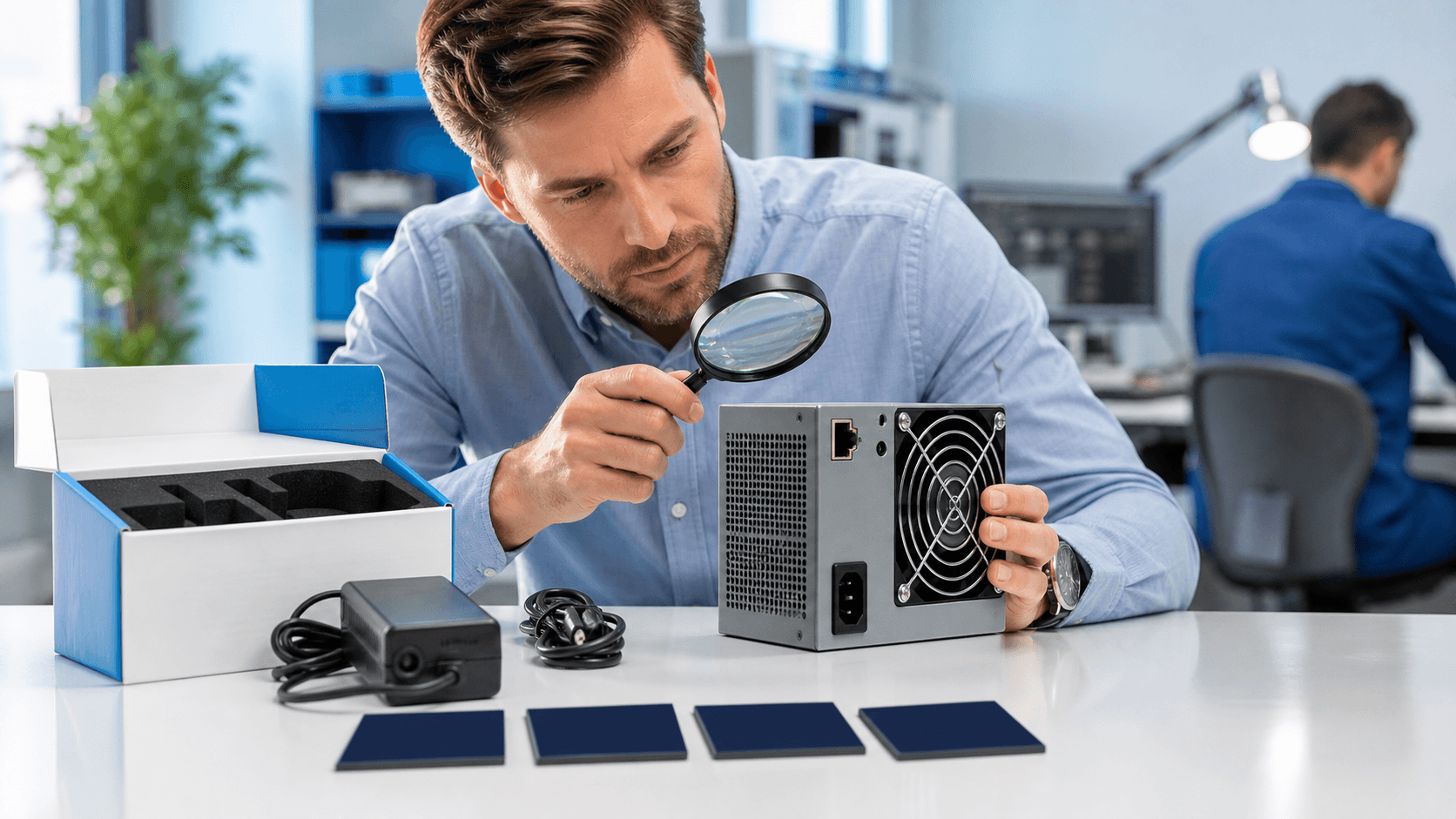
Power and safety gaps are a real risk. A good setup should use a known PSU type, correct voltage, safe cabling, and clear airflow guidance. If the product listing does not clearly show the power supply requirements, ask before you buy.
Quick Buying Tip:
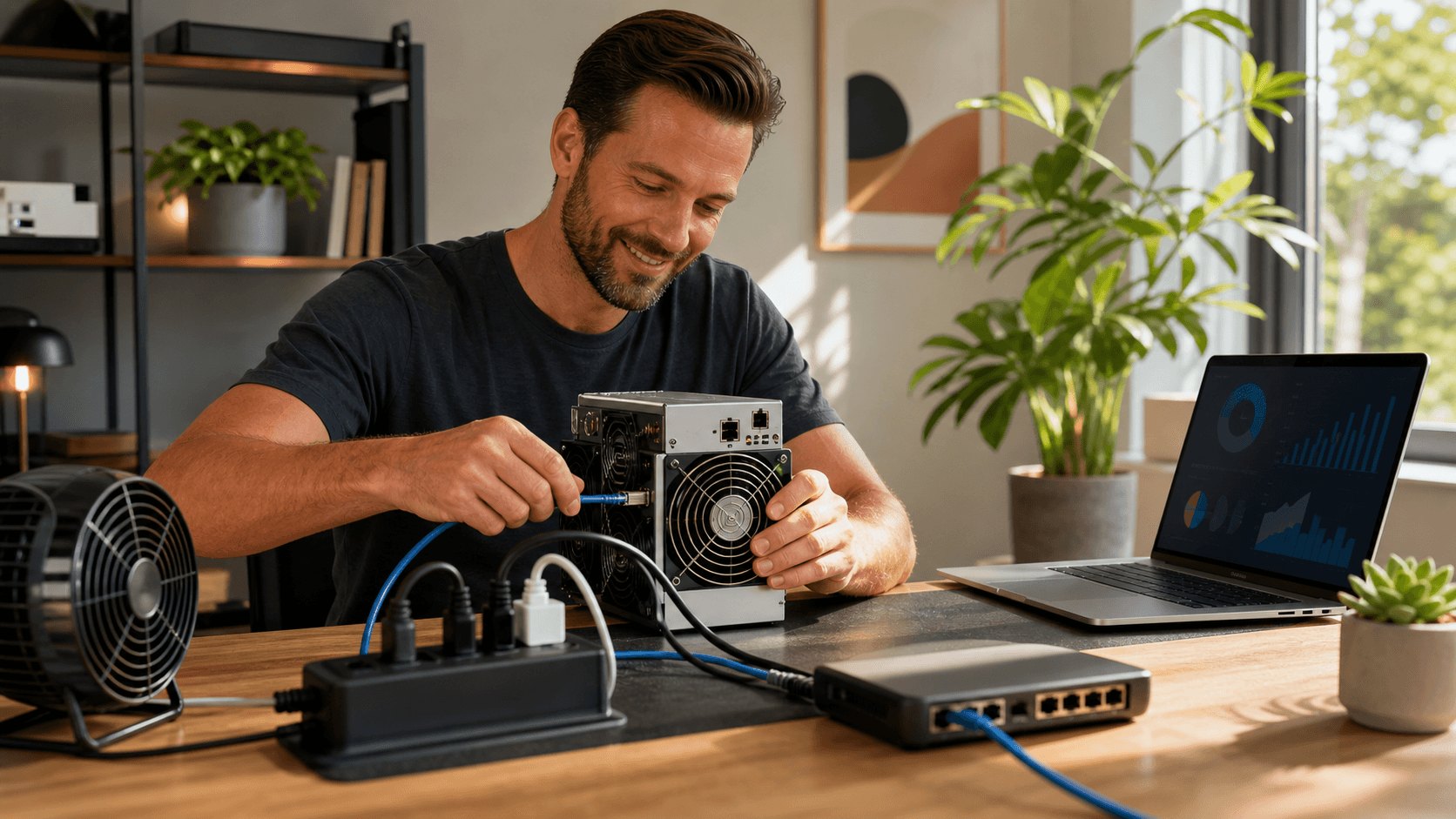
When possible, pair your miner with an appropriately rated 12 V PSU (or server PSU with breakout board) from a reputable vendor, and budget for basic cooling; often, a simple desk fan or open metal rack is enough for these compact units.
Who Should and Should Not Buy a Bitcoin Lottery Miner
Bitcoin lottery miners are not for everyone. Some people will be happier with a simple wallet and regular Bitcoin purchases instead.
You should skip a lottery miner if:
- You need predictable income to pay bills or debts
- You want guaranteed ROI on a fixed timeline
- Your power cost is high and your space is tiny and must stay very quiet
- Constant fan noise, even at a low level, will bother you or your family
- You do not want to deal with firmware menus, pool URLs, or basic network settings
There is a learning curve. You will likely touch things like firmware updates, solo pool setup or node configuration, IP addresses, and temperature monitoring. If that sounds stressful, you are probably better off buying Bitcoin directly or using a hosted solution from a provider you trust.
On the other hand, a Bitcoin lottery miner is well‑suited for:
- Hobbyists and tinkerers who like to build, flash, and tweak small hardware
- Long‑term Bitcoin believers who see mining as a fun side project, not income
- People with a home lab, homestead, basement, or spare room that can take some extra heat
- Folks in cooler climates who can put miner heat to good use when the weather turns cold
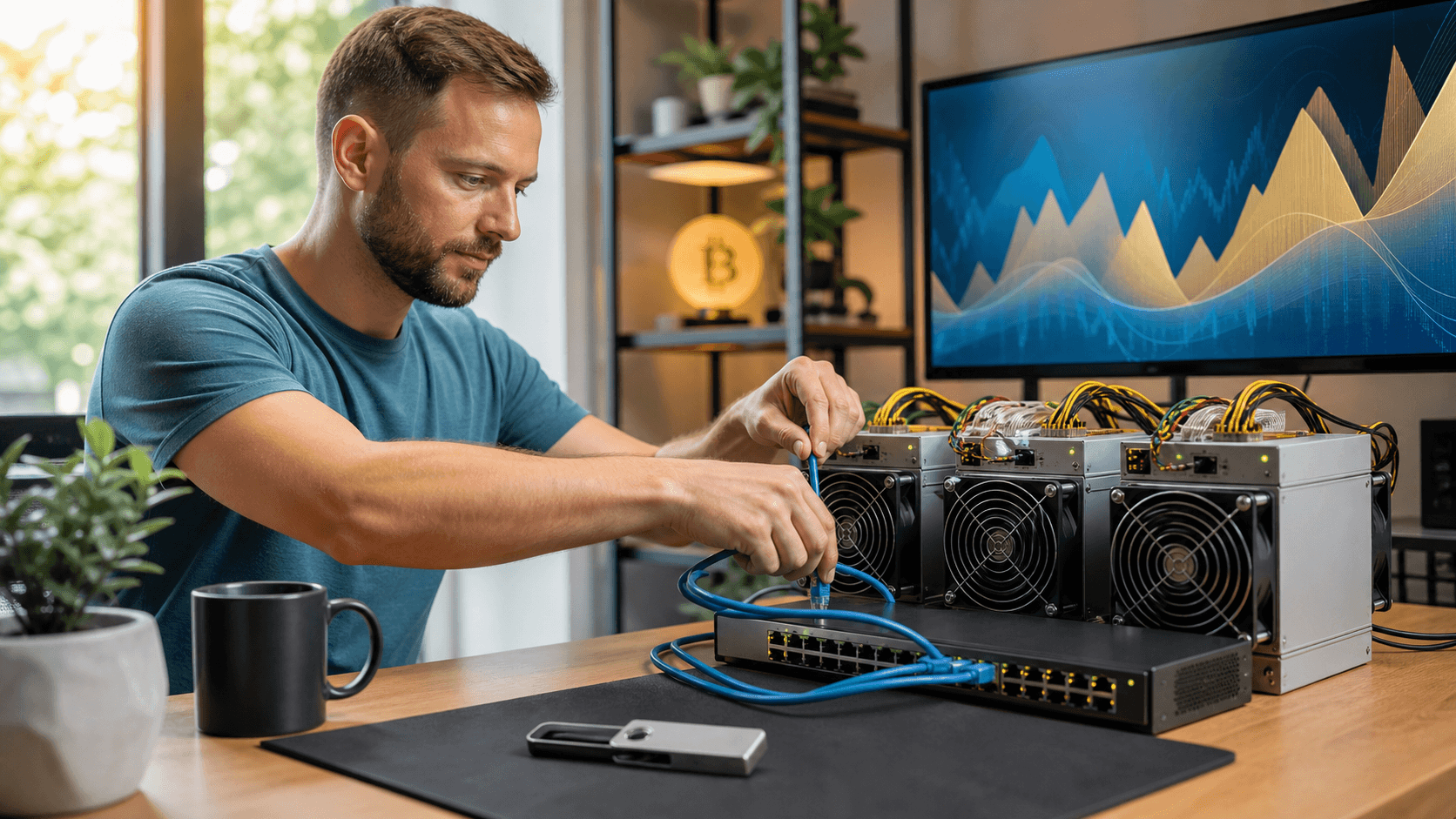
Typical setups often include a compact Bitaxe or NerdQaxe style unit, a matched 12 V PSU or server PSU, solid Ethernet cable, a smart plug for power tracking, and sometimes a small fan or sound‑dampening box. If your budget allows, adding a dedicated smart meter plug and an extra fan is an inexpensive, high‑impact upgrade for safety and comfort.
Comparison: Lottery Miners Vs Traditional ASICs
When you compare lottery miners against full‑size ASICs, focus on use case, not just hashrate:
- Traditional ASICs: higher hashrate, much higher power and noise, usually run in pools for steady payouts; better suited to dedicated mining spaces.
- Lottery Miners: very low power and noise, much lower hashrate, usually run solo or via solo pools; better suited to learning, experimentation, and occasional block wins.
Both types use ASIC chips and can contribute to network security. Lottery miners just package that functionality into something that fits better into a normal home. If you later move to a larger ASIC, the accessories you buy now, Ethernet cabling, smart plugs, rack or shelf, and fans, will still be useful.
If you are ready to buy, start with an in‑stock compact ASIC plus a known‑good power supply. Add a smart plug and a small external fan if you want easier monitoring and cooler operation.
Living with and Setting up Your Lottery Miner
Day-to-day, your big three are power, noise, and cooling.
For power planning, you will want to:
- Check the amp limit for the outlet and circuit you plan to use
- Add up the watts of your miner and other gear on that line
- Multiply your miner's watts by hours per day and your local kWh rate to estimate monthly cost
- Use a surge protector or smart plug so you can track and cut power safely
Noise is often close to a gaming PC or small desktop fan for many compact builds, though it depends on chips, cooling, and room temperature. Placing the miner in a closet, basement, or closed office with some airflow can reduce how much it's heard in living spaces. Simple sound boxes or soft mounts can cut vibration.
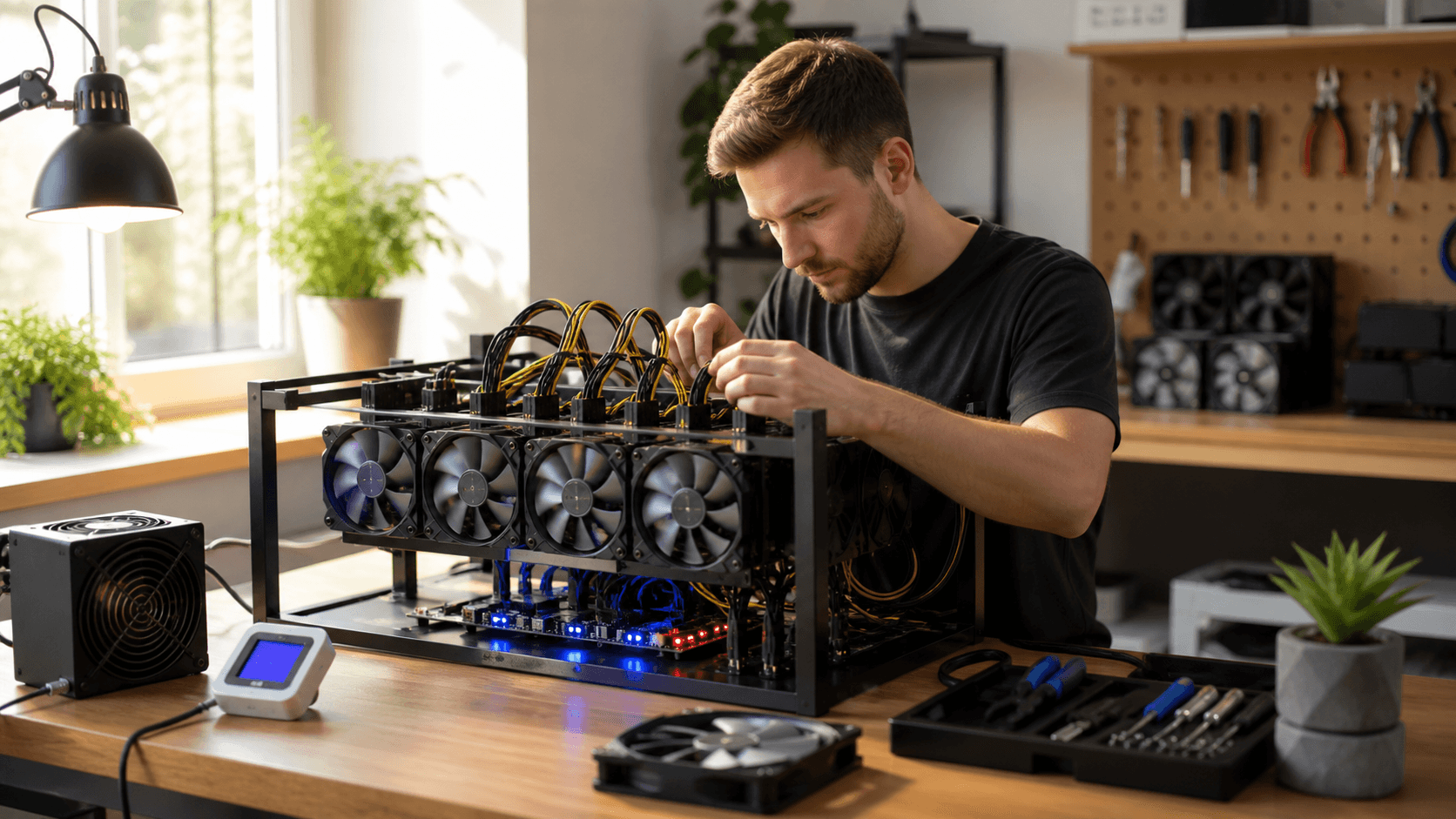
Cooling in fall and winter can actually be a benefit. Miner heat can warm a small office or workshop. Just keep it away from flammable items, give it clean intake air, and check for dust build‑up over time. In some spots, a small external fan or filter panel is worth adding.
For setup, you will need more than just the miner:
- A suitable PSU and the right cables
- Wired Ethernet connection
- Access to your router to find or set the IP
- A Bitcoin full node you control or a solo pool account
- Basic tools like a screwdriver and possibly a USB to TTL cable for deeper firmware work
The simple path looks like this: mount the miner, wire power safely, plug in Ethernet, power on, find the device on your network, open the web interface, set pool or node details, and watch for accepted shares. Common first‑week issues include wrong pool URLs, underpowered PSUs, thermal throttling from poor airflow, and IP address confusion.
If you want a smoother first build, choose a miner bundle that includes a properly sized PSU and basic cables. Then add a smart plug and, if your room runs warm, a small fan as an inexpensive upgrade.
Quick FAQ for Bitcoin Lottery Miner Buyers
How Much Can You Earn With a Compact Bitcoin Lottery Miner?
You should plan for long stretches of zero block hits and treat any win as a bonus. Expected value depends on your hashrate, network difficulty, and uptime. Some people also mine on pools to get small steady payouts alongside the "lottery" attempt, but that changes the use case and makes the setup closer to a traditional small‑scale miner.
What Happens If I Turn My Miner Off at Night?
Your odds are only active when the miner is running. Turning it off just means fewer hours hashing, which lowers long‑term block chances. You do not lose any stored "luck" when it powers down, but you are simply not participating in the lottery while it is off.
Do I Need My Own Full Node?
Running your own node is great for privacy, verification, and learning, but many people start with hosted solo pools. With hosted options, pick a provider you trust, read their documentation, and understand their payout rules and minimum thresholds. As you gain experience, adding your own node is a solid upgrade.
How Loud Are These Miners Compared to a Gaming PC?
Many compact miners are in a similar range to a gaming PC or desktop fan at load, assuming good firmware and reasonable room temperatures. Some higher‑power builds can be louder, especially in hot rooms. If noise is a concern, choose lower‑watt models and plan on placing them in a separate room or using a simple sound‑dampening enclosure.
What If the Exact Model I Want Is Sold Out?
Most builders release batches. If a unit is out of stock, look for an in‑stock model with the same chip generation, similar hashrate, and comparable power draw. You can also sign up for restock alerts and compare both options once more units are ready. In the meantime, you can still purchase the accessories you will need, PSU, Ethernet cable, smart plug, and basic cooling, so you are ready when the miner arrives.
Do I Need Any Accessories Besides the Miner Itself?
Yes. At minimum, plan for a compatible power supply, Ethernet cable, and either a surge protector or smart plug. For better comfort and safety, add a small fan and a basic rack, shelf, or mount so the miner has clear airflow.
Ready to Get Started?
If a Bitcoin lottery miner fits your goals, and you want a low‑power, low‑noise way to participate in mining and learn the hardware, choose an in‑stock compact ASIC, match it with a safe power supply, and add simple cooling and monitoring accessories. That combination gives you a reliable, home‑friendly setup that can run for the long haul with minimal fuss.
Unlock Your Chance at Bitcoin Rewards With Proven Hardware
If you are ready to experiment with low-cost mining for potential high-value payouts, our Bitcoin lottery miner is a practical way to get started. At Saber Shore, we focus on hardware that is straightforward to set up, efficient, and transparent in how it works. Take the next step today by exploring the specs, seeing how it fits your goals, and reaching out if you need guidance. If you have questions before you dive in, simply contact us and we will help you evaluate your options.