Understanding Solo Mining Odds for Home Bitcoin Lottery Miners
Solo mining odds are your statistical chance of finding a Bitcoin block with your own hardware. With compact "lottery" miners at home, your short‑term odds are extremely low, often far below 1% over a full year, but never zero. The more hashrate you run and the longer you keep it online, the higher your long‑term probability becomes, though it always remains a gamble rather than an income plan.
If you want to try solo mining, start by choosing the right small miner for your space, power budget, and noise tolerance. Compact solo miners like Bitaxe‑class and NerdQAxe‑class devices let you participate without turning your home into a mini data center.
Quick next step: Decide how much you are comfortable spending on hardware and electricity. Then pick a compact miner class (single‑chip, multi‑chip, or small ASIC) that fits your space and noise limits. Once you know your realistic odds, the hobby feels more transparent and enjoyable.
How Solo Mining Odds Really Work in Plain English
Bitcoin creates a new block roughly every 10 minutes on average. Miners race to solve a cryptographic puzzle. The network adjusts difficulty so blocks stay close to that 10‑minute target. When total network hashrate rises, difficulty rises, the puzzle gets harder, and your share of potential blocks shrinks.
Your solo mining odds are driven by three simple ideas:
- The network finds blocks at a steady average pace.
- Your miner is throwing random guesses (hashes) at the puzzle.
- The more hashes per second you contribute, the better your odds over time.
You can think of each hash as a lottery ticket:
- A single‑chip Bitaxe‑class device gives you a small number of tickets every second.
- A multi‑chip NerdQAxe‑class device gives you more tickets in the same time.
- A small, full ASIC in solo mode gives you a much larger stack of tickets.
The network has an enormous pile of tickets, and one wins every block.
A few points that many miners misunderstand:
- Odds do not "build up" over time. There is no miner that is "due" for a block.
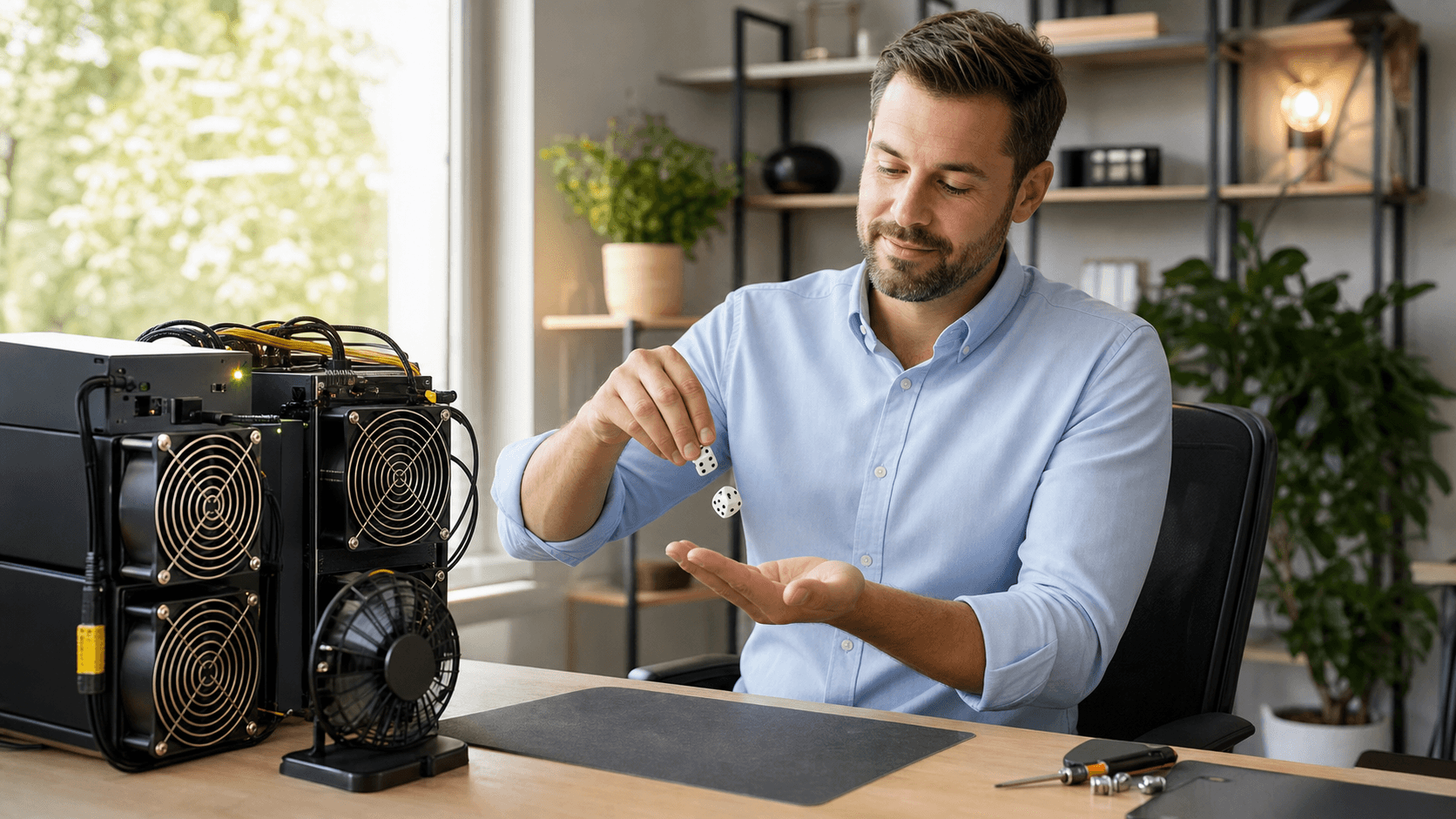
- Each hash is independent, a fresh roll of the dice.
- Higher uptime simply means you roll the dice more often.
- No pool or solo server can "remember" how long you have mined in a way that improves your odds on the next hash.
On a day‑to‑day basis, your chance of hitting a block with a compact home miner is very close to zero. Over months or years of steady hashing, the probability slowly increases, but it always remains a long‑shot.
Key Decision Factors for Your First Bitcoin Lottery Miner
Solo mining odds matter, but at home, comfort and practicality are just as important. When you choose your first miner, focus on these factors:
- Hashrate, How many hashes (guesses) per second the miner produces.
- Power Draw, How much electricity it uses and what that costs per month.
- Noise, Fan volume and tone; whether it's acceptable in your living area.
- Heat, How much extra warmth the miner adds to the room.
- Cooling, Whether stock cooling is enough, or you need better airflow or fan upgrades.
- Connectivity, Wi‑Fi vs. Ethernet stability in your chosen location.
- Setup Difficulty, Whether it's plug‑and‑play or requires firmware, tuning, or network configuration.
- Ideal User, Who that device makes the most sense for (beginner, tinkerer, or serious hobbyist).
You can group compact miners into three broad categories:
- Single‑chip Compact (Bitaxe‑class), Tiny, quiet, very low power, lowest odds, best for learning.
- Multi‑chip Compact (NerdQAxe‑class), More hashrate and heat, more tuning, better odds within a hobby budget.
- Small, Full ASIC in Solo Mode, Significantly higher hashrate and odds, but bigger, louder, and harder to live with indoors.
Comparison Table: Compact Solo Miner Categories
Miner Type
Typical Hashrate (relative)
Power Draw
Noise Level
Cooling Needs
Connectivity
Setup Difficulty
Ideal User
Single‑chip compact (Bitaxe‑class)
Low
Very low, often USB‑level
Quiet, gentle fan
Basic fan, open air
Wi‑Fi / Ethernet (model‑dependent)
Beginner‑friendly
First‑time solo miners, desk setups, apartments
Multi‑chip compact (NerdQAxe‑class)
Medium (several times a single‑chip device, model‑dependent)
Moderate; requires a proper PSU
Noticeable fan noise
Good airflow; fan upgrades helpful in warm rooms
Ethernet or stable Wi‑Fi recommended
Intermediate; some tuning and monitoring
Hobby miners who want better odds and like to tinker
Small full ASIC in solo mode
High for home use
High; dedicated 120/240 V circuit often recommended
Loud; best in garage/basement
Strong airflow; may need ducting or room ventilation
Ethernet preferred for stability
Advanced; power and network planning required
Experienced home miners with suitable space and power
Action reminder: Decide which category fits your living situation first (apartment, office, or garage). That choice narrows your options and prevents buying a miner that is too loud or power‑hungry for your home.
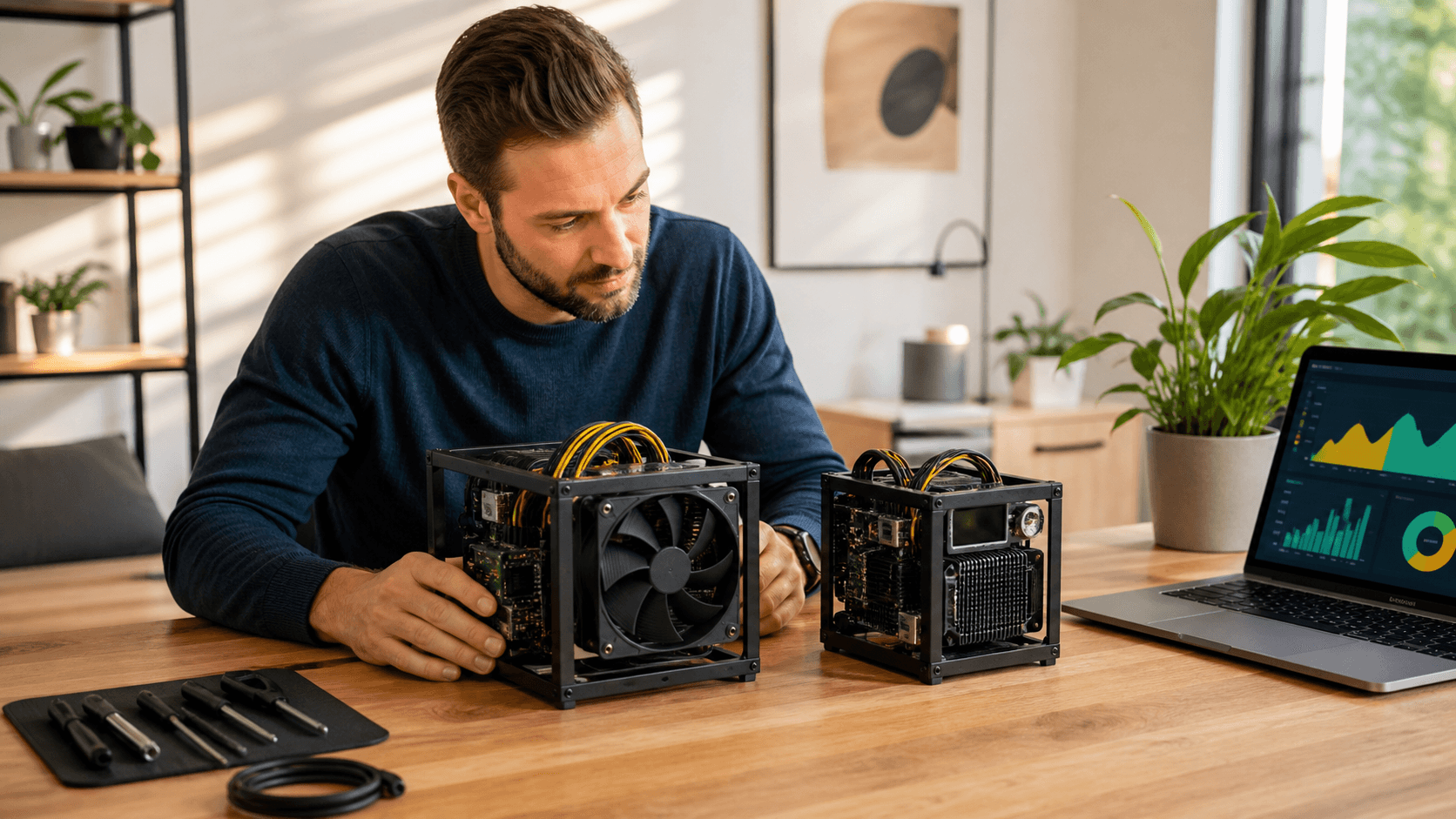
Comparing Bitaxe‑Class and NerdQAxe‑Class Miners for Solo Odds
Bitaxe‑class and NerdQAxe‑class miners both target home lottery miners, but they emphasize different trade‑offs. The goal here is to outline those trade‑offs in a neutral, practical way so you can match them to your needs.
Bitaxe‑Class Miners
- Emphasize simplicity, low power draw, and very compact size.
- Typically quiet enough for a desk or shelf in a shared room.
- Often run well at stock settings; tuning is optional.
- Best suited to miners who value low noise and minimal power cost over hashrate.
NerdQAxe‑Class Miners
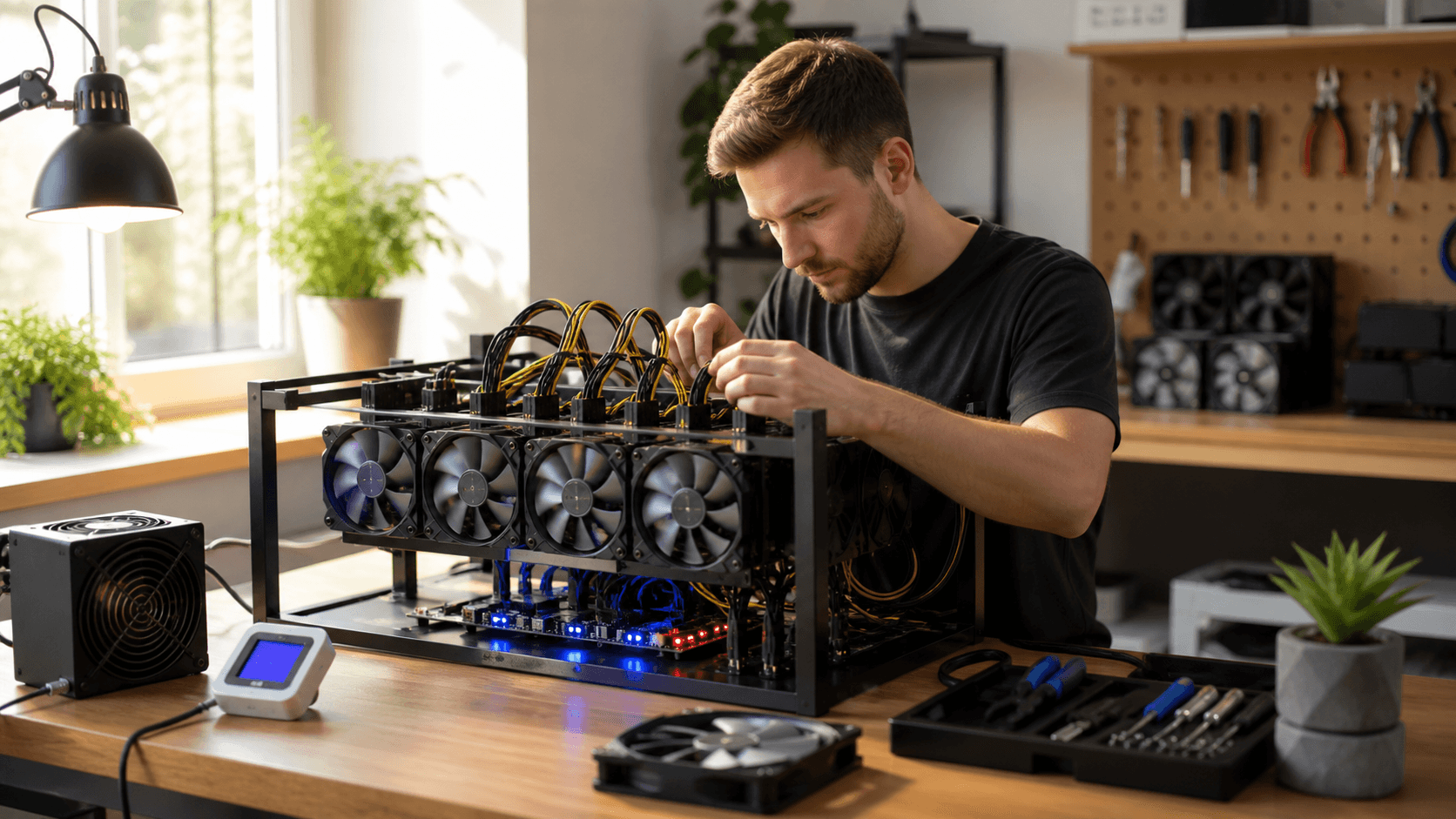
- Use multiple chips (depending on model) to deliver noticeably more hashrate than basic single‑chip devices.
- Draw more power and produce more heat and noise than a typical single‑chip compact miner.
- Offer more room for firmware tweaks, overclocking, and undervolting for those who enjoy adjustments.
- Better long‑term solo odds than a single‑chip compact, simply because of the higher hashrate.
Side‑by‑Side: Bitaxe‑Class vs. NerdQAxe‑Class
Factor
Bitaxe‑Class
NerdQAxe‑Class
Relative Hashrate
Baseline for compact solo miners
Several times higher than a basic single‑chip device (varies by model)
Electricity Use
Very low; easy on a standard outlet and power bill
Moderate; still hobby‑friendly, but noticeable on the bill
Noise
Generally quiet; suitable for desks and living spaces
Louder; more comfortable in a ventilated corner, office, or spare room
Cooling Requirements
Stock fan usually sufficient in normal room temperatures
Benefits from good airflow; fan or case upgrades can help in warm environments
Connectivity
Typically supports Wi‑Fi/Ethernet (check specific model specs)
Ethernet is recommended for stable solo connections
Setup & Tuning
Beginner‑friendly; works at stock settings
Suited to tinkerers; more scope for firmware and performance tuning
Ideal Use Case
Quiet, low‑power solo "lottery" mining and learning Bitcoin mining basics
Hobby miners who accept more power and noise in exchange for better odds
Best‑Fit Recommendations
- Best for Absolute Beginners and Quiet Apartments: Bitaxe‑class single‑chip compact miner.
- Best for Hobbyists Who Like to Tune and Want Higher Odds: NerdQAxe‑class multi‑chip compact miner.
- Best for Experienced Home Miners with a Garage or Basement: Small, full ASIC operated in solo mode.
Action reminder: Once you pick a miner class (Bitaxe‑style or NerdQAxe‑style), plan for a suitable power supply and basic cooling. Those small accessories make the difference between a stable setup and constant interruptions.
Optimizing Your Solo Mining Setup at Home
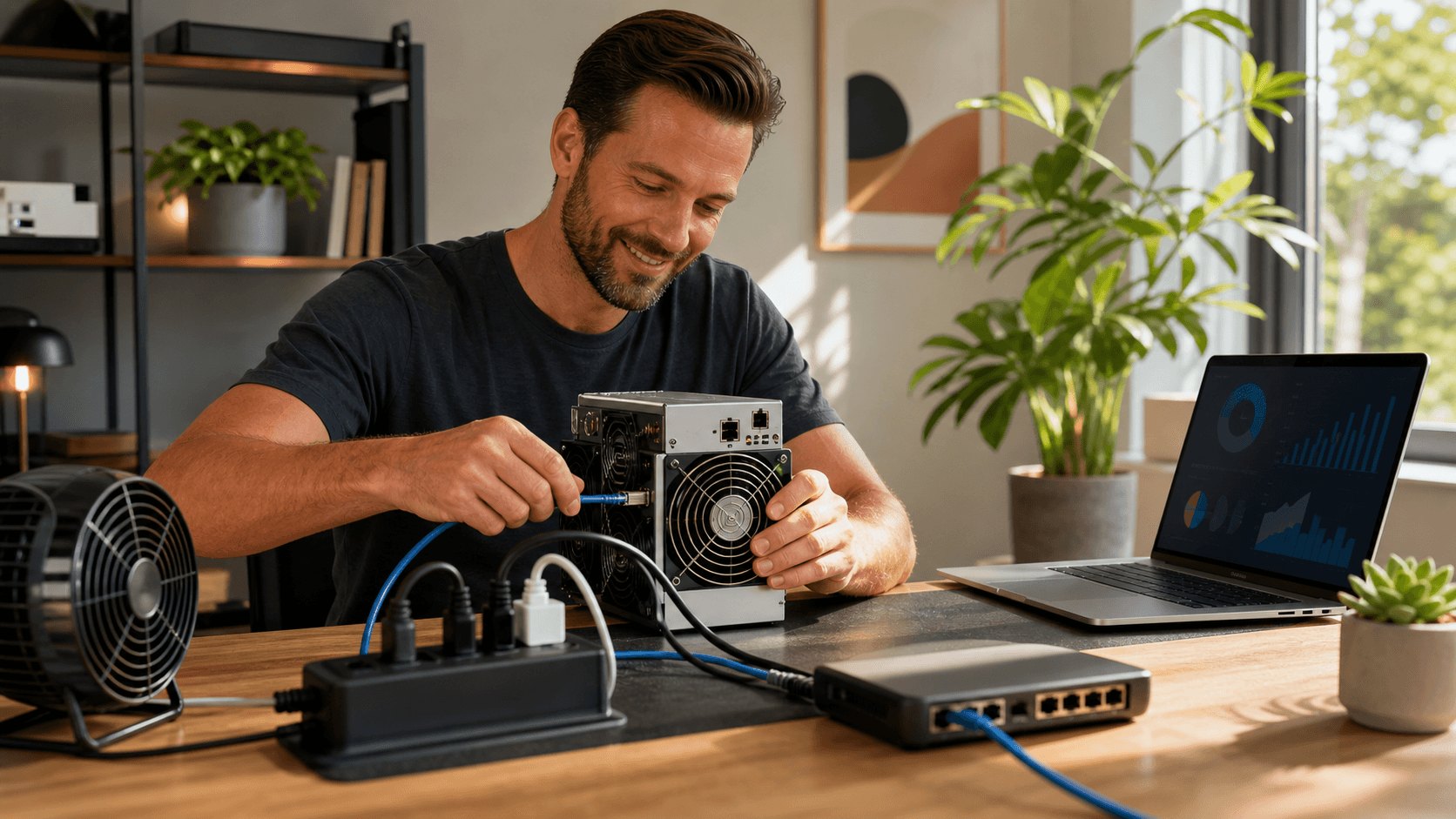
After you choose your miner, your main goal is stable uptime. The more hours your miner runs at full hashrate, the more lottery tickets you generate.
1. Power
- Use a power supply that comfortably matches or exceeds your miner's rated wattage.
- Add surge protection to protect against power spikes and storms.
- Keep power cables tidy and avoid tight bends or pinches behind furniture.
2. Cooling and Placement
- Keep air intakes and exhausts clear; avoid closed cabinets or boxes.
- Aim exhaust away from walls so hot air can move out of the area.
- In warm seasons, a simple desk or room fan can help move hot air away.
3. Noise and Comfort
- Avoid bedrooms or quiet shared spaces if fan noise is an issue.
- Hallways, offices, or closets with airflow often strike a good balance.
4. Connectivity
- Use a stable router and, if possible, a wired Ethernet connection for solo mining.
- If you rely on Wi‑Fi, ensure strong signal strength where the miner is located.
- Confirm your solo node or pool endpoint settings so your submitted shares count.
Helpful Accessories to Consider:
- Appropriately sized ATX or dedicated PSU, depending on miner requirements.
- Quality surge protector or UPS for power stability.
- Additional case fans or a small room fan for miners in warmer rooms.
Realistic Expectations, Budget Picks, and Quick FAQ
Solo mining is best treated as a fun, educational side project with a small chance of a large payout. Align your setup with your budget and expectations.
Budget‑Based Recommendations
- Under a Few Hundred Dollars
- Best for: Learning, quiet desk setups, and trying solo mining with minimal risk.
- Recommended Gear Style: Bitaxe‑class single‑chip compact miner, plus a simple, reliable PSU and surge protection.
- Mid‑range Hobby Budget
- Best for: Miners who want noticeably better odds and don't mind higher power draw and noise.
- Recommended Gear Style: NerdQAxe‑class multi‑chip compact miner with a higher‑quality PSU and some airflow planning.
- Serious Home Hobby Budget
- Best for: Dedicated spaces like garages, basements, or small workshops.
- Recommended Gear Style: Stronger compact multi‑chip miners or a small ASIC in solo mode, paired with a robust PSU and deliberate room cooling.
When you move up a tier, you gain hashrate and long‑term probability, but also more power usage, heat, and noise. Because the odds stay low at every level, choose hardware you'll be comfortable running continuously rather than hardware that makes you second‑guess the power bill.
Quick FAQ (Based on Common Buyer Questions)
Can I Realistically Ever Find a Block with a Compact Miner?
Yes, it is statistically possible. Even a small miner has a non‑zero chance to find a block. However, the odds for a single compact device are extremely low, and many users will never see a hit in practice.
How Often Do People Hit a Block with a Bitaxe‑class Miner?
There is no fixed schedule or pattern. Some miners get lucky early; many never find a block. Because each hash is independent, past mining time does not make you "closer" to a win.
Is Solo Mining Better Than Pool Mining?
It depends on your goal:
- Solo Mining: Very rare, all‑or‑nothing payouts (one full block if you win, usually nothing if you don't).
- Pool Mining: Regular, smaller payouts that match your hashrate contribution.
Many home miners run a pool miner for consistent income and a compact solo miner as a lottery side project.
What Happens If My Solo Miner Finds a Block?
If your miner is correctly pointed to your own solo node or a properly configured solo endpoint, the full block reward (minus any applicable fees) goes to the address you've configured.
What Accessories Should I Buy with a Compact Solo Miner?
At minimum, plan for:
- A power supply matched to the miner's requirements.
- Surge protection.
- Adequate ventilation (small fan if the room runs warm).
Specific PSU and accessory choices depend on the exact miner model and your local power standards.
Ready to Get Started?
To start solo mining responsibly, pick the miner class that fits your space and budget, pair it with a suitable power supply and basic cooling, and plan for continuous uptime. If you're new, a quiet Bitaxe‑class compact miner is usually the easiest way to get hands‑on experience. If you already know your way around hardware and want higher odds, a NerdQAxe‑class or small ASIC in solo mode is the logical next step.
Choose your miner type, add the right PSU and cooling accessories to your cart, and set up your solo endpoint so that every hash you generate has a real chance to land a block.
Improve Your Bitcoin Mining Confidence With Clear Next Steps
If you are serious about understanding your real solo mining odds, we can help you move from theory to practical action. At Saber Shore, we provide hardware and guidance designed to match your risk tolerance and technical experience. Reach out to contact us so we can walk through your goals and determine a setup that gives you the best shot at long-term success.