Quiet Hashrate at Home: Mining Bitcoin Without Annoying the Neighbors
A quiet Bitcoin miner for an apartment is possible, but it takes the right gear and a bit of planning. Noise and heat are usually bigger problems than power use. A loud miner can keep people awake, and a hot room in late summer can feel miserable.
At Saber Shore, we help home miners match the right hardware to their space. If you already know you want small, quiet hardware, compact solo and lottery-style units are usually the best place to start. See Current Compact Miners in Stock: Filter by Low Noise
Most full-size ASIC miners are built for warehouses, not small living rooms. They are strong on hashrate, but weak on comfort. Below we walk through what actually works in an apartment, what does not, and how to pick hardware that feels more like a computer and less like a leaf blower.
What Quiet Really Means for Apartment Mining
When we say "quiet," we are not talking about silence. We are talking about a sound level you can live with every day.
A few simple targets help:
- Living room or home office: close to a normal desktop PC
- Bedroom: closer to a small router or quiet laptop
- Shared walls: the less low rumble, the better
Noise is more than a single decibel number. A single tiny fan screaming at high speed can feel harsher than a bigger fan moving more air at slow speed. When we evaluate apartment miners, we pay attention to:
- Fan size: larger fans can spin slower for the same airflow
- Fan RPM: slower spin usually means a softer tone
- Airflow path: clear air in and out means fans do not have to work as hard
Heat is tied directly to noise. In a small apartment, a miner that runs hot will quickly force its fan to ramp up. In August, when outdoor air is already warm, that can turn a "quiet" setup into a constant whoosh. A quiet Bitcoin miner for an apartment needs:
- Low power draw so it does not dump too much heat
- Easy airflow around it, not stuffed into a tight shelf
- A spot where hot air can move away instead of circling back
Cold months are easier, because the heat feels more like a bonus. Summer is where placement and expectations really matter.
Why Full-Size ASICs Struggle in Apartments
Full-size datacenter ASICs, like the common S19-class units from the major manufacturers, are built for big spaces with strong cooling. Stock, they often bring:
- Loud, high-pitched fans that sound like a jet taking off
- Constant airflow that carries through walls and floors
- Heat output that can turn a small room into a sauna
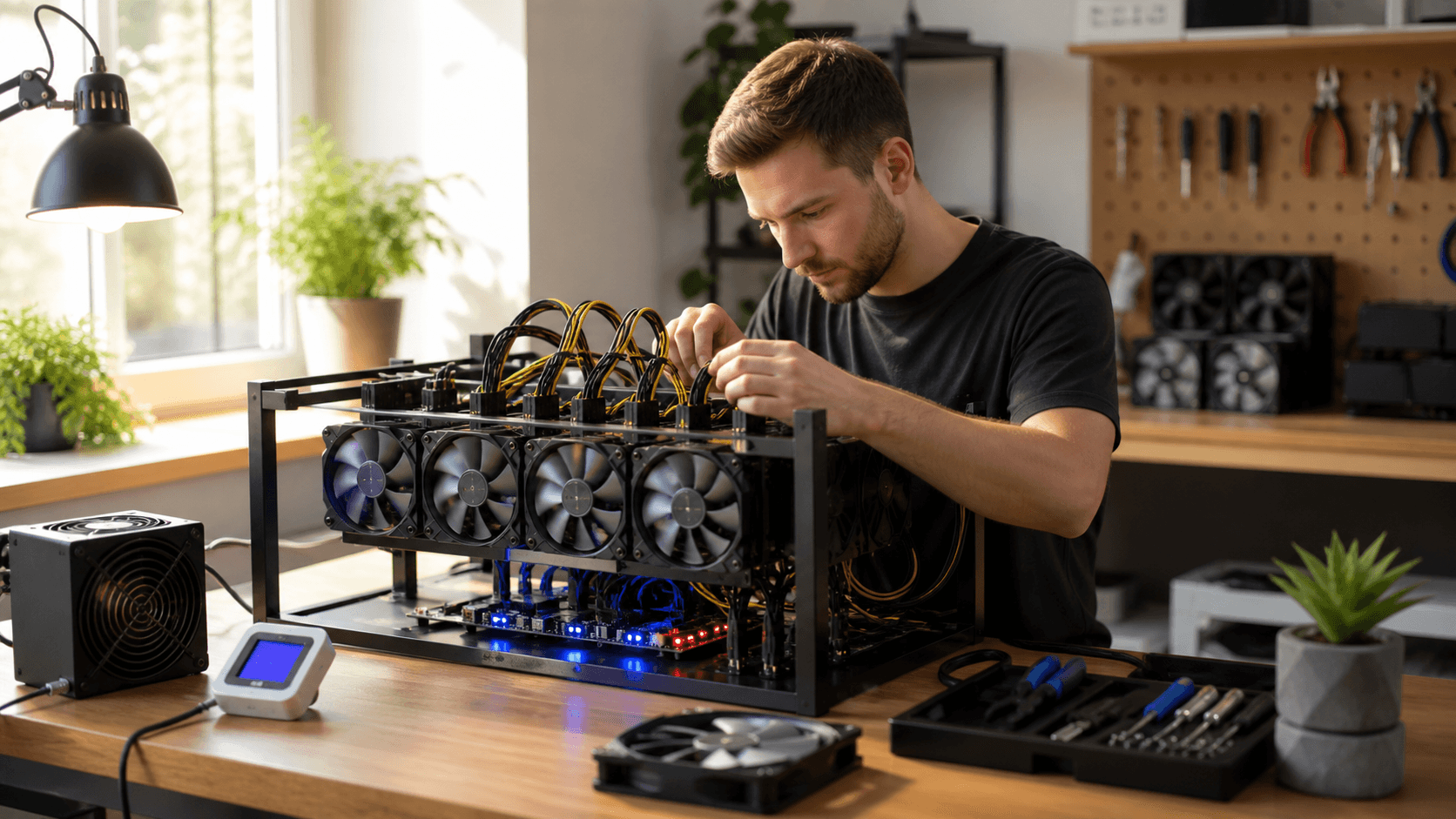
Some home miners try to make them apartment-friendly with underclocking and fan swaps. Underclocking means running the miner at lower power so it makes less heat, so the fans can spin slower. Aftermarket fan mods often use bigger or quieter fans and sometimes ducts.
These tricks can help, but they do not turn a warehouse machine into a soft little desktop box. Tradeoffs look like this:
- Underclocking: less noise and heat, but also less hashrate
- Fan mods: lower pitch and less whine, but still not silent
- Custom cases: less direct noise, but more work and more space
For a renter, there are other realities:
- Power circuits in apartments are often limited
- Landlords may care about constant noise or extra heat
- Neighbors above, below, or next door may hear low fan rumble
In practice, many people who start with a full-size ASIC in an apartment end up turning it off or moving it elsewhere. It can work if you have a spare room, strong DIY skills, and patient neighbors, but it is rarely the best first step for an apartment miner.
Compact Solo and Lottery Miners That Actually Work in Apartments
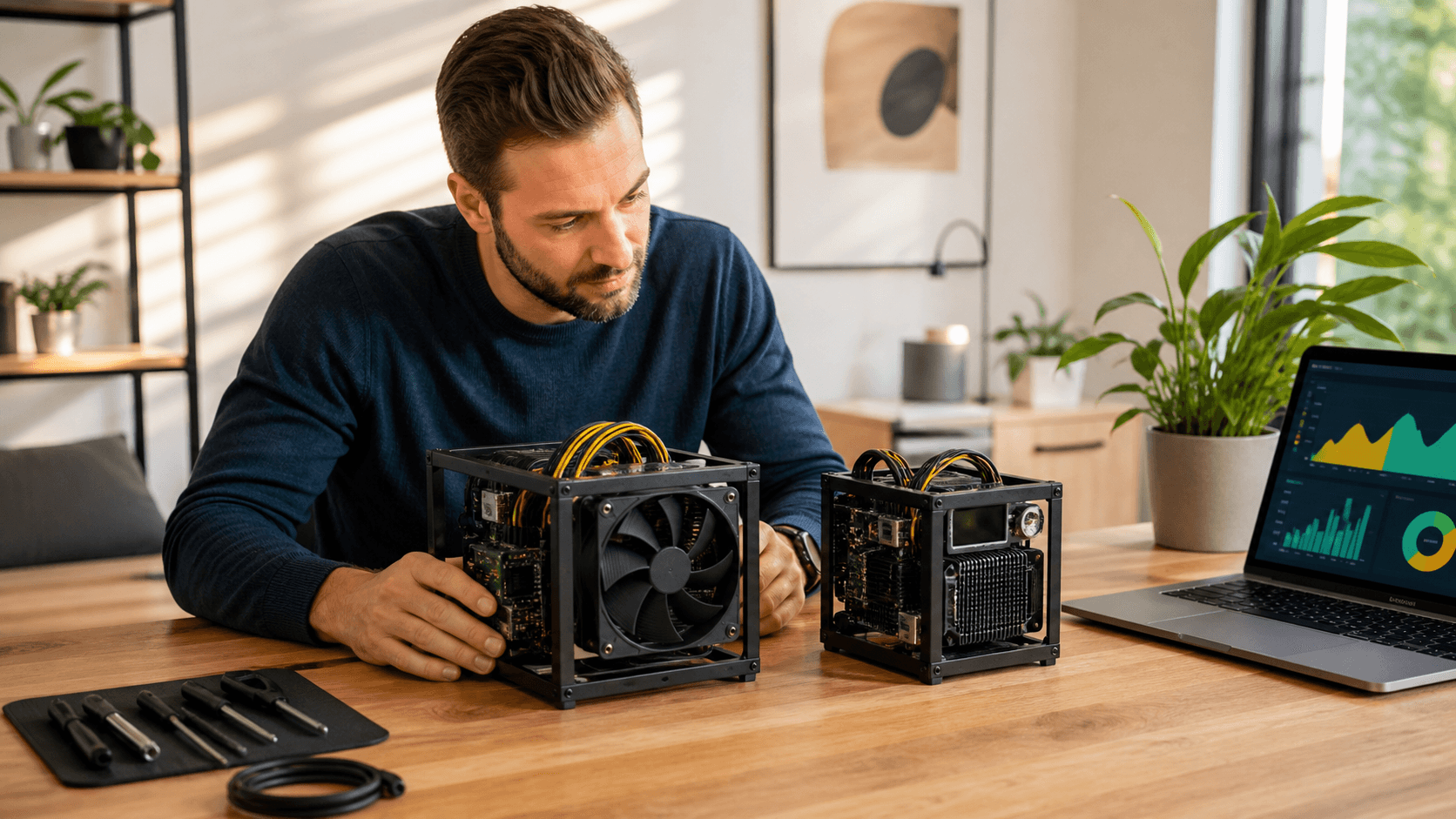
This is where compact open-source miners come in. Solo and lottery-style units such as community-designed boards (for example, Bitaxe / NerdQaxe families) and similar compact devices we carry are designed to be small, low power, and friendly to home setups.
They are not income machines. They are "low odds, high fun" tools. You are pointing real hashrate at the network, supporting it, learning how mining works, and giving yourself a tiny shot at a block. For hobbyists, that is often the whole point.
Compared with full-size datacenter ASICs, these compact units typically offer:
- Single-board designs that are closer to a smart device than a big ASIC
- Power draw in the same ballpark as a laptop charger or small PC
- Noise levels that feel like a quiet desktop or even less
Form factors vary. Some plug in through USB power, some use small power bricks. Either way, they typically:
- Sit on a desk or shelf without shaking it
- Sound more like a PC fan than an ASIC farm
- Fit in a home office or living room without taking over
When you are picking a quiet Bitcoin miner for an apartment, focus on models that are actually in stock and ready to run. On the Saber Shore store, we clearly mark units that are available to ship now and offer restock alerts for popular boards that sell out quickly.
- Sold Out Board? Use "Notify When Available" or See Similar Items That keeps your expected noise and heat in the same comfortable range.
How to Set up a Quiet Apartment Mining Corner
Once you have a compact miner in hand, placement is half the battle. Aim for a spot that has:
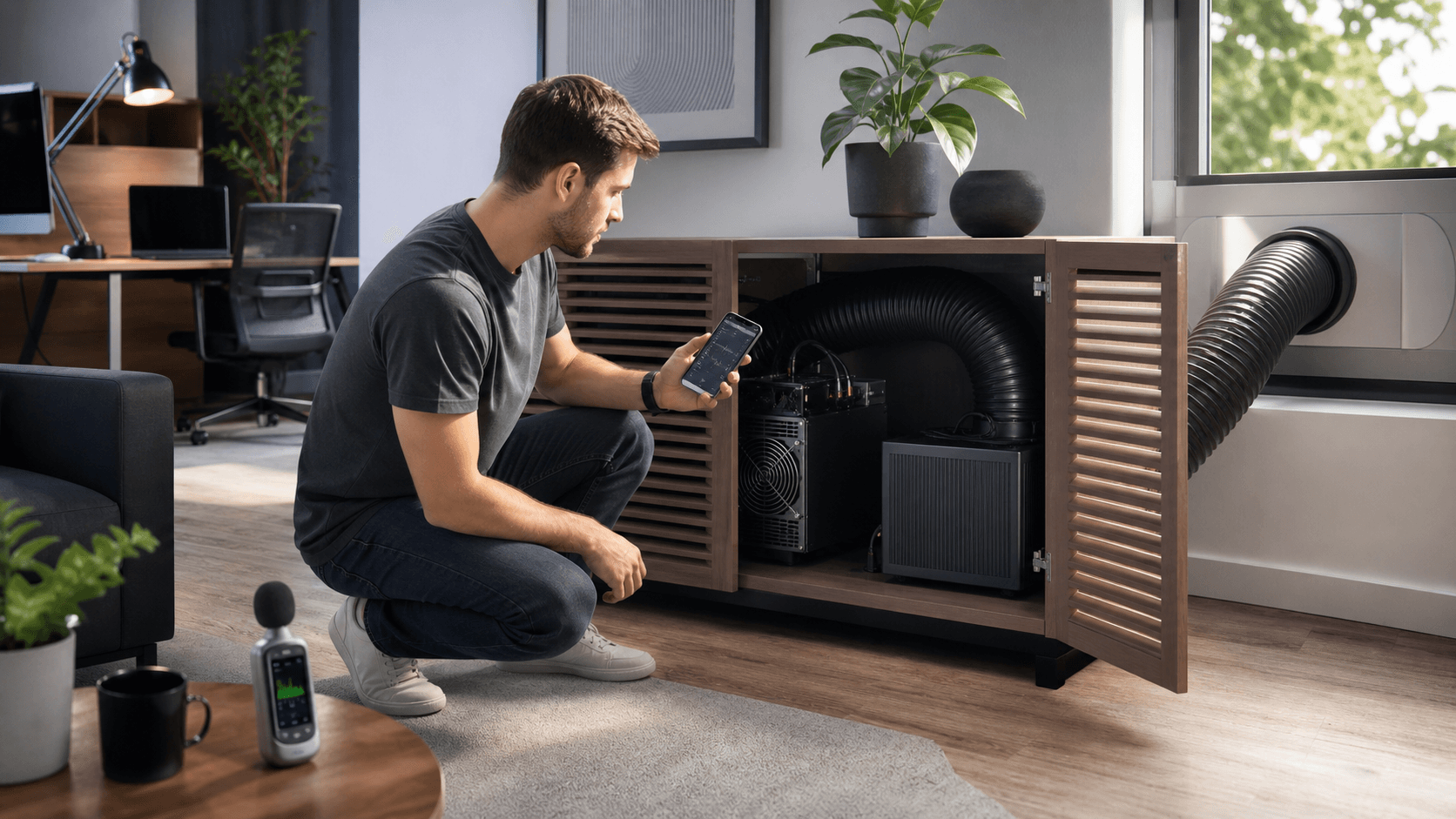
- Some airflow, not sealed in a cabinet
- Space around it for warm air to move away
- Distance from shared bedroom walls where possible
A few practical tricks help keep things quiet:
- Put the miner on a solid desk, not on a hollow shelf that can buzz
- Use rubber feet or a soft pad to cut vibration
- Avoid bare corners where sound can bounce and feel louder
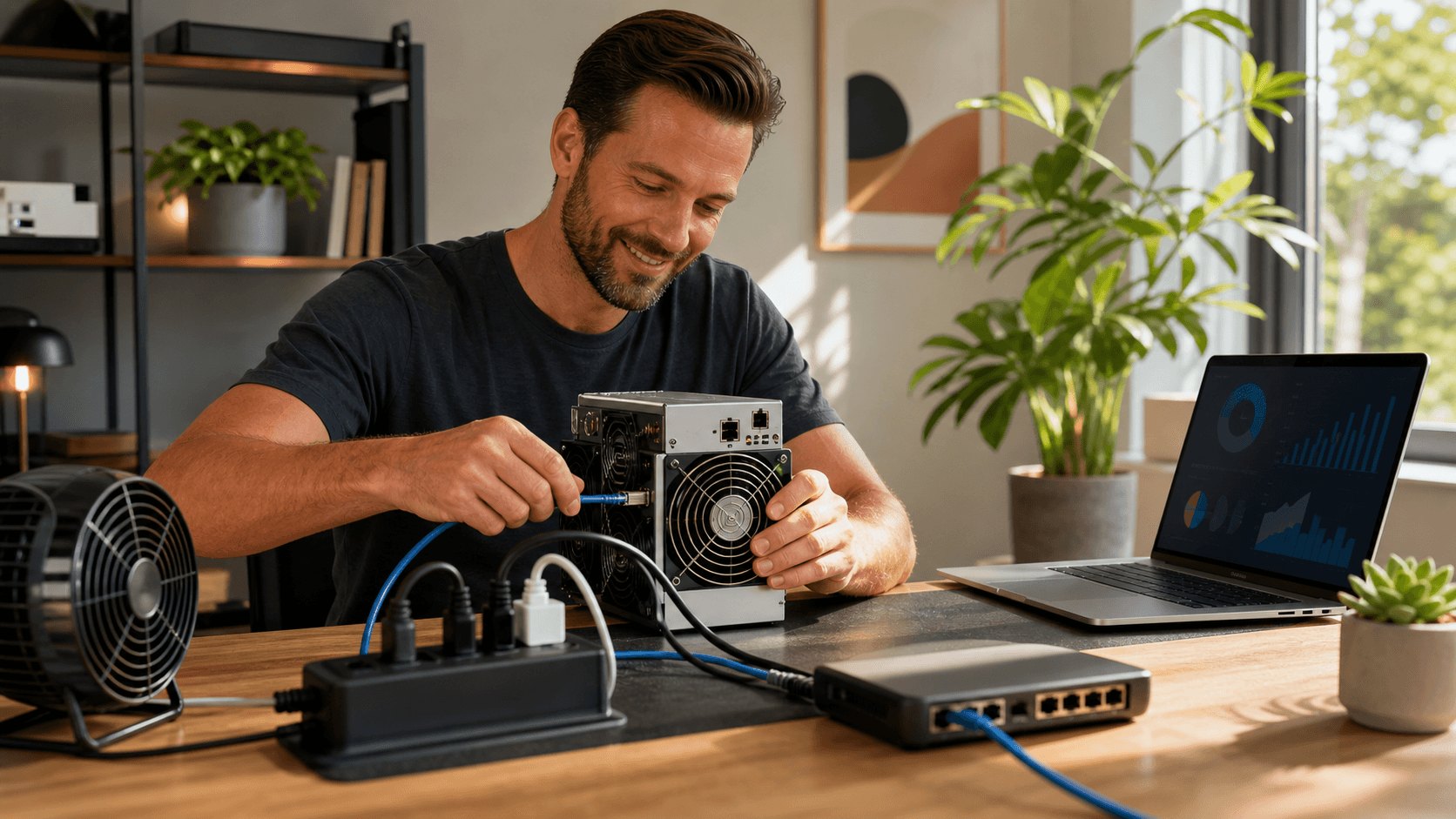
Safety and comfort matter too. Even low-power miners deserve good cables and a solid power strip with surge protection. Expect a small bump in room temperature, especially in smaller spaces. In a hot summer, a simple room fan or a slightly open window can keep air moving so the miner does not need to ramp up its own fan.
Starting with one low-noise unit lets you see how your apartment reacts before you add more. Every building is different, and this test run gives you real data on sound, heat, and neighbor impact.
Realistic ROI, Enjoyment, and When to Scale up
With compact solo and lottery miners, the financial return is not the main draw. Power use is low, but hashrate is also modest. Many apartment miners treat these devices as:
- A way to learn how mining works
- A piece of gear to tinker with and collect
- A small way to support the Bitcoin network
You can track luck and payouts through mining dashboards or pool tools. Some people enjoy watching their miner's stats and uptime more than watching direct earnings. They look at ROI as:
- Knowledge gained
- Time spent with a hobby they enjoy
- The rare chance of hitting a solo block
If you decide you want real revenue and higher hashrate, that is usually the time to look at full-size ASICs in a hosted or colocated setup. That keeps the warehouse noise and heat out of your apartment, while still giving you the power of big gear.
Home hobby mining gives comfort and control. Professional hosting gives scale. Many people end up doing a mix of both. Ready for Hosted Hashrate? See ASIC Picks and Match Your Budget
Quick FAQ for Apartment Bitcoin Miners
These are the questions we hear most from home and apartment miners.
How Loud Is a Quiet Bitcoin Miner for an Apartment, Really?
Think closer to a quiet desktop PC or small router with a fan, not a server rack. You should be able to talk over it without raising your voice. For specific models on our site, check the listed noise range so you can match it to your room.
Can You Mine Profitably in a One-Bedroom Apartment?
Profit depends on power rates and total hashrate. With compact solo and lottery miners, it makes more sense to treat it as a hobby than a main income source. If you want to target profit, look at pairing compact at-home gear with a hosted full-size ASIC through a reputable provider.
Will a Landlord or Neighbors Notice?
With low-power, quiet miners placed away from shared walls and used on safe circuits, most people find they blend into normal home noise. Good placement and safe power use help a lot. If you are unsure, start with a single low-noise unit from our "Apartment-Friendly" collection and see how it feels.
Do You Need Extra Cooling or Soundproofing?
Most compact miners only need simple airflow. A small room fan, a bit of distance from walls, and avoiding closed cabinets are usually enough. For hotter climates, we note recommended ambient temperature ranges on each product page so you can plan ahead.
What If the Miner You Want Is Sold Out?
Sign up for restock emails on the product page, and in the meantime, choose a similar in-stock unit with close power draw and fan style. On Saber Shore, we group alternatives with similar noise and power profiles so you can pick a backup option without guessing.
Which Type of Miner Should I Choose as My First Apartment Unit?
For most renters, we suggest starting with a compact, low-power solo or lottery-style miner from our apartment-friendly list. It keeps noise, heat, and power draw manageable while you learn the basics of configuration and monitoring.
Start Your First Quiet Mining Setup with Confidence
You do not need a warehouse ASIC to take part in Bitcoin mining. You do need hardware that fits your living space, your power, and your noise tolerance. One compact, quiet miner in a good spot can teach you far more than a loud rig you feel forced to shut off.
At Saber Shore, we focus on compact, open-source solo and lottery-style miners that fit real homes and real apartments, from small desks to shared spaces near the coast. Find a Match That Fits Your Noise and Power Budget Today Start small, see how your room feels with a quiet Bitcoin miner for an apartment, then decide if you want to grow into more units or larger hosted gear later on.
Enjoy Efficient Home Mining Without the Noise
If you are ready to mine Bitcoin without disrupting your neighbors or your daily routine, Saber Shore has you covered. Our quiet bitcoin miner for an apartment is designed to balance performance, sound, and energy use so you can mine comfortably at home. Take the next step toward building your own passive income stream with hardware that actually fits apartment life. If you have questions before getting started, feel free to contact us and we will help you choose the right setup.