Home Bitcoin Lottery Mining in Plain English
Home Bitcoin lottery mining means running a very small solo miner at home for fun, learning, and a tiny ongoing chance at a full block reward, not for steady income or predictable ROI. If you want a hands-on way to support the network and experiment with mining using low power and low noise, it can be a great hobby. If you need reliable payouts or a clear break-even date, this is not the right path.
If you already know you want to try it, your next step is to match a compact miner to your budget, power costs, and noise tolerance. Scroll to the comparison table below to see which miner style fits you best, then pick a unit that's in stock and add the right power supply and cooling.
What a Bitcoin Lottery Miner Is and How It Works
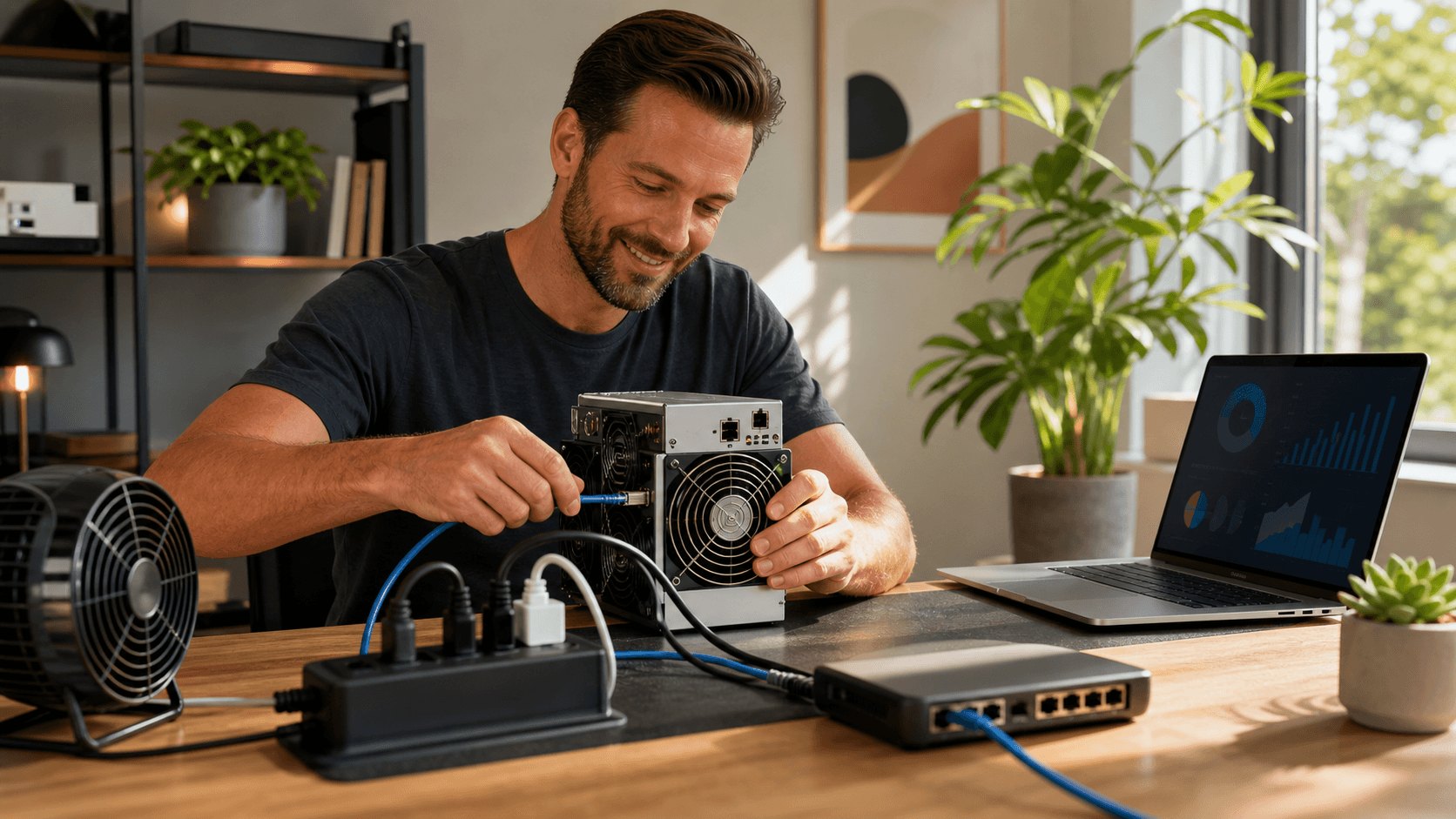
Traditional Bitcoin miners think in terms of large ASICs, loud fans, and big power draws. A compact Bitcoin lottery miner is the opposite: a small, low-power, usually air‑cooled ASIC board or USB device that you can run in a normal home without needing a dedicated mining room.
When we say "lottery mining," we mean solo mining with a very small hashrate. Your miner is sending out hash guesses all day, like buying digital lottery tickets again and again. Most tickets will not win, but the chance is not zero. There is no steady payout to count on.
Hashrate is simply how many hash guesses your miner can try every second. A full‑size warehouse ASIC can make an enormous number of guesses. A little solo miner does far fewer, so your chance of finding the right hash is tiny. That's why we call it lottery mining: you're playing the same game with far fewer tickets.
There are two common ways to do this at home:
- True Solo Mining to Your Own Node
- Solo‑style Mining Through a Service or Small Pool
With true solo, if you ever find a block, you keep the whole block reward and fees, but it could take a very long time or never happen. With a small pool or solo‑style service, you might get more frequent, tiny payouts based on shares, but it's not the pure lottery feel.
At Saber Shore we focus on compact miners because they fit real homes. They're designed for people who want to turn on a small box, point it at a node or solo service, and quietly support Bitcoin without a warehouse.
Budget Levels, Power, and Home Setup
You can think of home lottery mining in three basic budget tiers. The hardware examples below are representative categories based on currently available compact miners such as Bitaxe‑class boards and similar designs. Always check current stock and exact specs before buying.
1. Entry: Learn the Basics on a Tight Budget
Entry setups under the cost of a low‑end phone usually look like this:
- A tiny board or USB‑style miner
- Basic built‑in or small add‑on fan
- A PC, laptop, or Raspberry Pi as the controller
Typical specs in this class:
- Hashrate: roughly 200 MH/s to 3 GH/s (0.0002 to 0.003 TH/s)
- Power use: about 3 to 15 W
- Noise: very quiet, like a small USB fan
Odds of hitting a solo block at this level are extremely low. This tier is best if you just want to see mining work, experiment with nodes and wallets, or use it in a classroom or with kids.
Recommended accessories:
- Quality USB hub or small 5, 15 V power supply rated well above the miner's draw
- Reliable Wi‑Fi or Ethernet for the controller
- Simple surge protector
2. Mid‑Range: Compact Boards for Serious Hobbyists
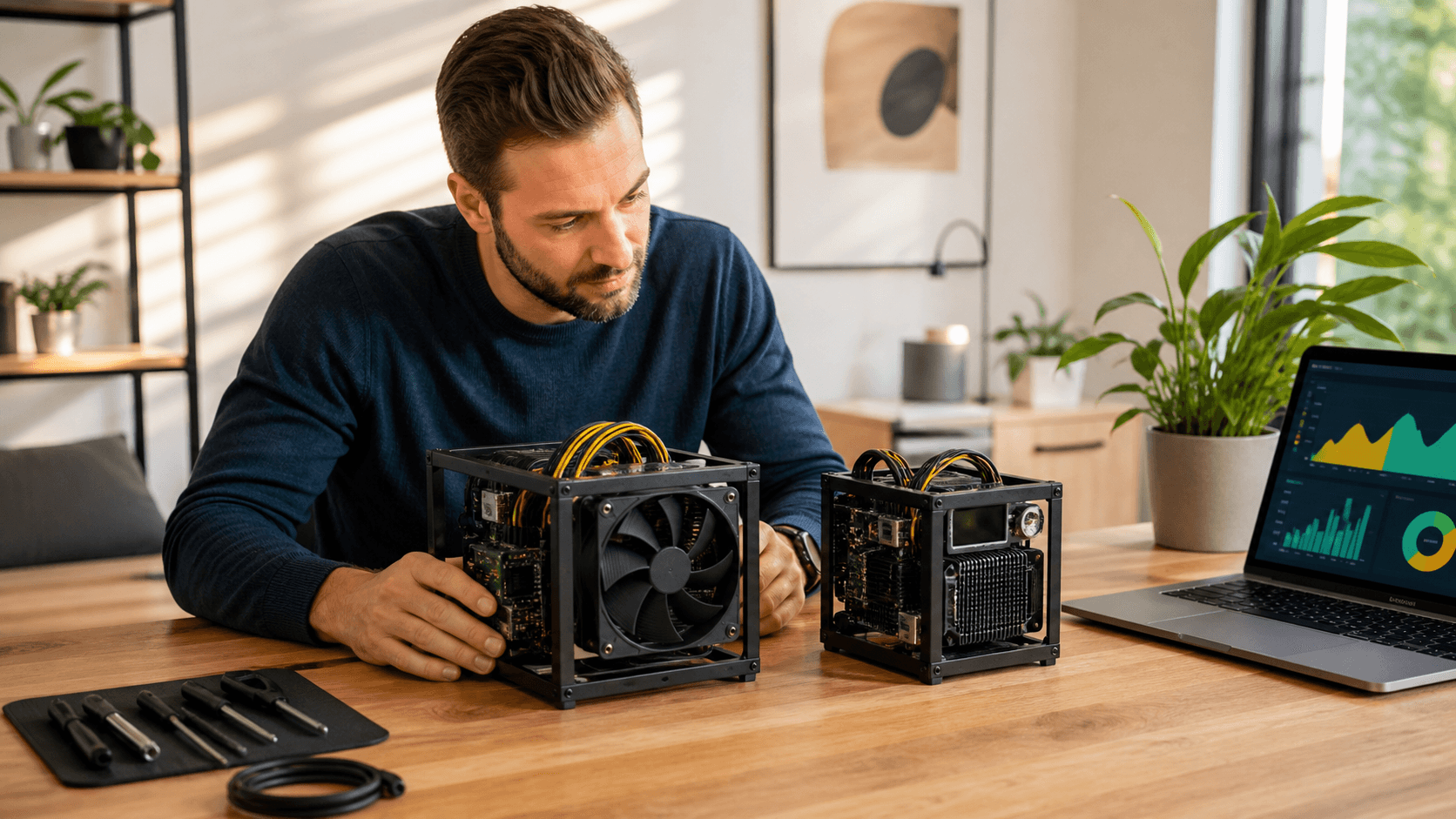
The sweet spot for many home miners is a single compact board in the middle price band. Boards in the Bitaxe‑style category typically offer meaningfully more hashrate while still fitting on a shelf.
Typical specs in this class:
- Hashrate: roughly 200 to 600 GH/s (0.2 to 0.6 TH/s), depending on the exact chip and tuning
- Power use: around 15 to 60 W
- Noise: desktop‑fan level, usually fine for a home office corner
At this level, airflow matters more. A small stand, a quiet 80, 120 mm fan, and maybe a basic UPS to keep it running through short outages are smart upgrades.
Recommended accessories:
- Name‑brand DC power supply sized with at least 20%, 30% headroom over the miner's wattage
- Open stand or wall mount to keep inlets and outlets clear
- Basic UPS if your power blinks often
3. Enthusiast: Compact Clusters and Higher Hash
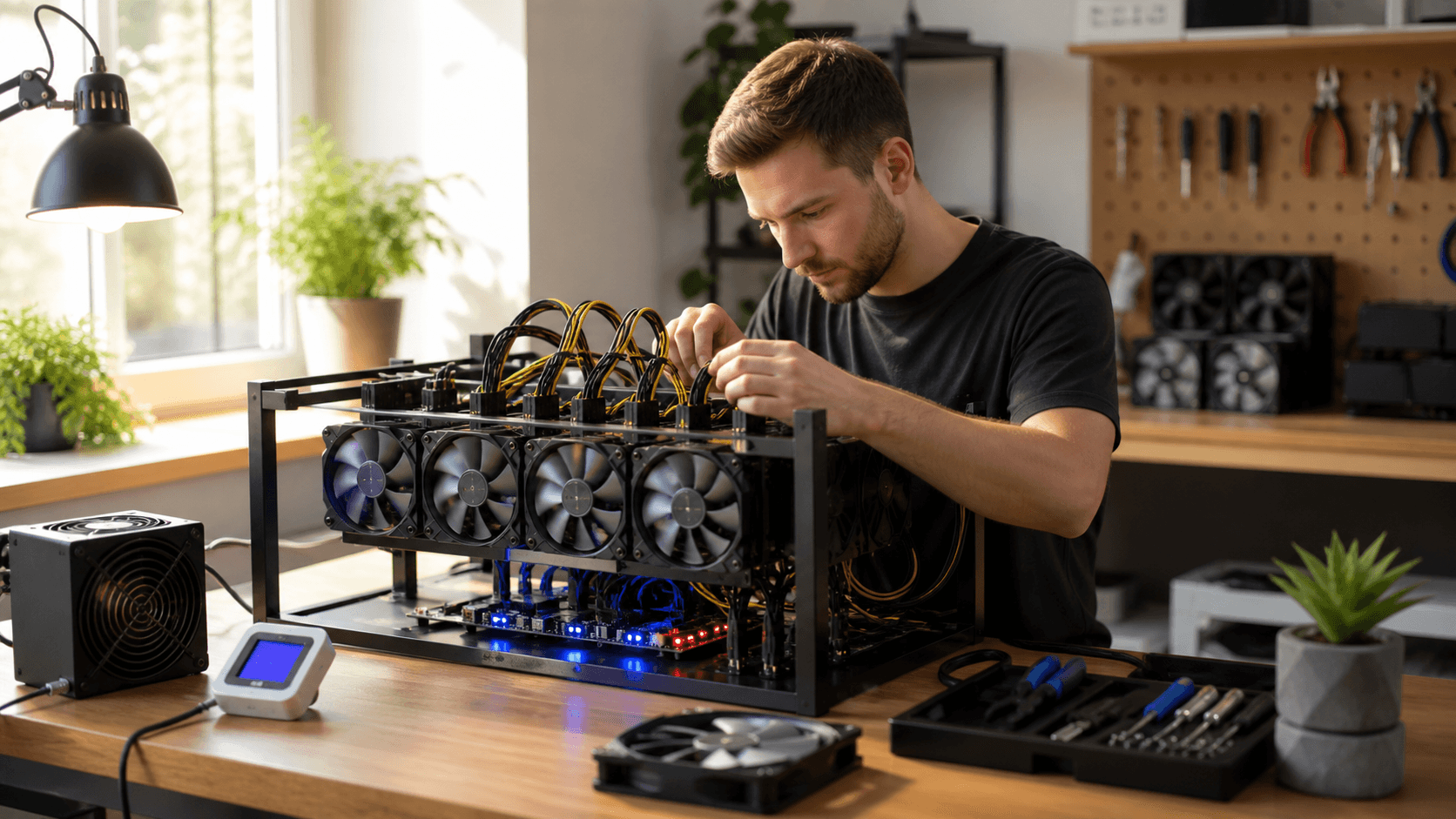
Enthusiast setups go further. You might run multiple compact miners side by side or a higher‑hash compact unit pointed at a solo node. Your odds improve in a simple way: more hashrate, more tickets. But it's still a lottery, not a paycheck.
Typical combined specs for a small cluster:
- Hashrate: roughly 1 to 3 TH/s total from several boards
- Power use: about 60 to 200 W total
- Noise: multiple fans; like a louder office room, still far below a warehouse ASIC
It's smart to think about:
- How much extra heat you want in one room
- How much sound you can live with day and night
- Whether the gear will be easy to resell later if your plans change
If you'd like a tailored recommendation, share your budget, available circuits, and noise limits with an experienced home miner or our support team so they can point you to a specific in‑stock model and power setup.
Power Use, Heat, and Noise at Home
Many compact miners sit roughly in the 10 to 60 W range per unit, depending on tuning. That's closer to a bright LED bulb or a small desk fan than to a clothes dryer.
A few practical points:
- One or two 30 to 60 W units are usually easy to power on a normal home circuit.
- In summer, several compact miners can make a small office feel stuffy. Use AC or extra airflow.
- In winter, that same heat can help warm a room you're already heating.
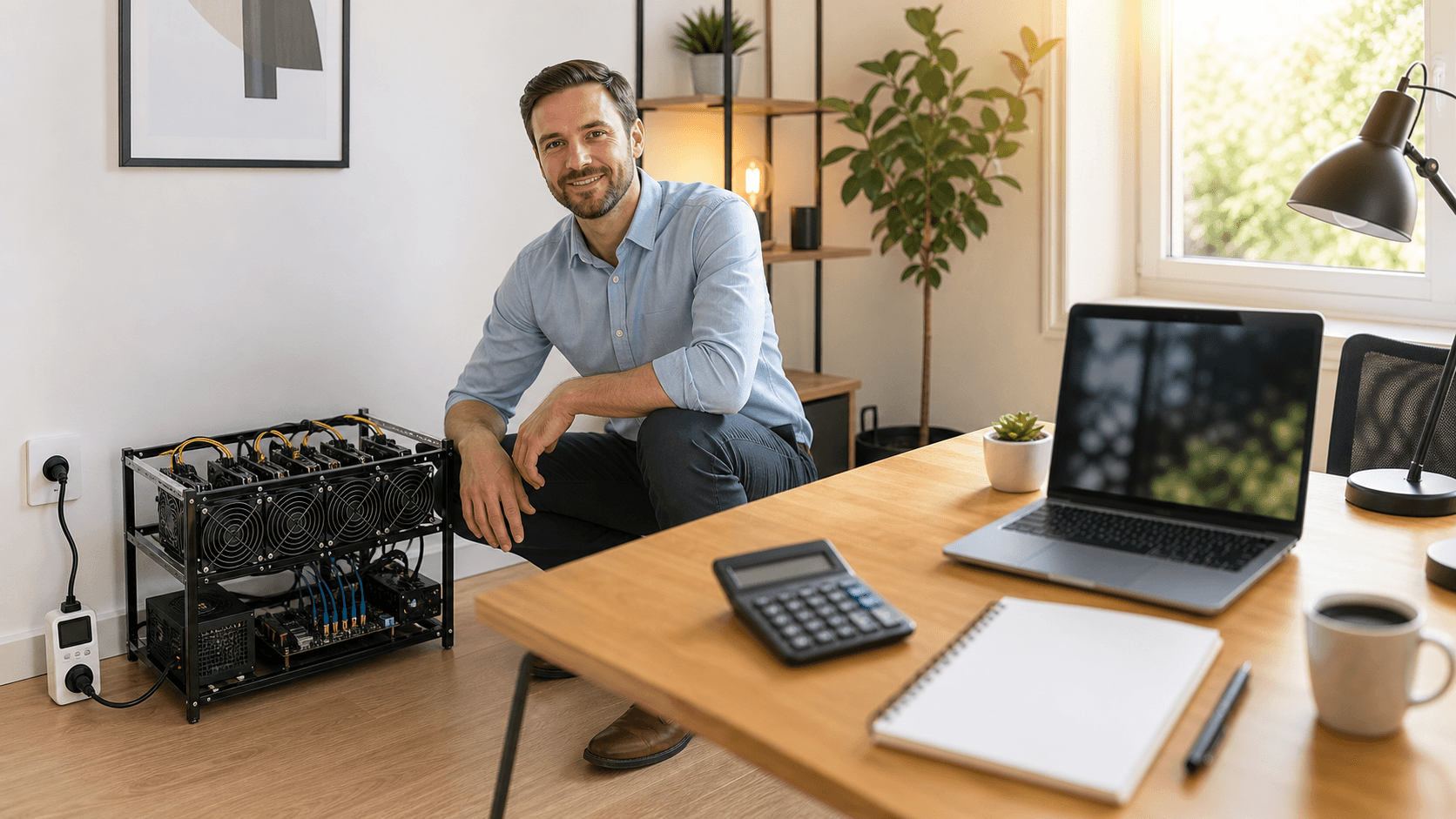
To estimate running cost:
- Take the miner's watts (for example, 30 W).
- Multiply by hours per day (30 W × 24 h = 720 Wh).
- Divide by 1000 to get kWh (720 Wh ≈ 0.72 kWh).
- Multiply by your power rate (0.72 kWh × your local $/kWh).
Noise for compact units is usually in the "desktop fan" range, which works in a home office, spare room, or basement shelf. Avoid closed cabinets with no airflow. Keep cords neat, use a surge protector, and make sure your home internet is solid and always on.
Break‑Even Reality and What You Actually Get
Break‑even for a Bitcoin lottery miner means this: do the value of any blocks you might find, plus the learning value you get, cover the cost of the miner and the electricity? Because the odds of a solo block are so low, the honest answer is often "no" in pure money terms.
Your chance to find a block comes from your share of total network hashrate. With a compact miner, that share is tiny. Over a year, your odds look more like a long‑shot bet than any kind of yield plan. Network difficulty and Bitcoin price both move around:
- When difficulty rises, your odds of a block drop.
- When price rises, the reward per block is worth more if you do win.
Many home miners think of the power cost as buying ongoing lottery tickets that also teach them something. Even if the ticket never wins, they gain:
- Hands‑on mining experience
- Practice with nodes, wallets, and basic hardware
- A deeper feel for how Bitcoin stays secure
This setup is a strong fit for curious Bitcoin users, tinkerers, teachers, and teens who like hardware projects. It's not a fit for anyone who needs steady income, has very high electricity costs, or is uncomfortable with long‑shot odds.
Compact Miner Comparison
The table below compares typical classes of compact lottery miners you're likely to see from reputable vendors today. Exact numbers vary by model; always confirm the current spec sheet before purchasing.
Product Type (Representative)
Hashrate
Electricity Use
Noise
Cooling Needs
Connectivity
Setup Difficulty
Ideal User
Typical Price Band
Entry Micro Miner (USB / tiny board)
~0.0002 to 0.003 TH/s (200 MH/s to 3 GH/s)
~3 to 15 W
Very quiet
Minimal; small built‑in fan or passive
USB; usually needs PC or Pi controller
Beginner‑friendly; basic software setup
First‑time learner, kids, classroom demo
Budget
Bitaxe‑Style Single Board Miner
~0.2 to 0.6 TH/s (200 to 600 GH/s)
~15 to 60 W
Quiet to moderate (desktop fan level)
Simple open airflow; small case fan
Wi‑Fi or Ethernet
Easy once guided; basic web UI
Apartment user, casual solo miner
Mid‑range
NerdQaxe‑Style Tweakable Board
Similar to Bitaxe‑class, often tunable
~15 to 70 W depending on settings
Quiet to moderate
Similar airflow; may benefit from adjustable fan curves
Wi‑Fi or Ethernet
Moderate; more options to tune
Tinkerers who like to tweak settings
Mid‑range
Compact Cluster (2 to 6 boards)
~1 to 3 TH/s total (depending on count and tuning)
~60 to 200 W total
Louder room tone; multiple fans
Needs planned airflow; open rack or shelf
Mix of Ethernet / Wi‑Fi through a router or switch
Advanced; network and power planning
Enthusiast solo attempt without full‑size ASICs
Higher hobby range
Best‑For Recommendations by Budget and Use Case
- Best Under a Tight Budget (Learning and Demos): Entry micro miner (USB or tiny board) with a simple 5, 15 W power supply. Great for classrooms, kids, and first‑time miners who want to see hashes submitting without a big spend.
- Best Balance for Small Apartments: A single Bitaxe‑class board with a quiet 80, 120 mm fan and a stable 12 V power supply. Low enough noise and heat for a living room or home office.
- Best Compact Option for More Serious Solo Attempts: A small cluster of 2 to 4 mid‑range boards on a ventilated rack, powered by a quality PSU, pointed at your own node or a solo service. Still hobby‑level odds, but meaningfully more hashrate.
If you're not sure where you fit, start with one mid‑range board: it's easy to live with, teaches you the basics, and you can always add a second unit later.
Helpful Accessories and Upgrades
When you choose a compact miner, consider adding:
- Proper Power Supply: A name‑brand PSU sized at least 20%, 30% above total miner wattage. For example, for a 60 W miner, choose 80 to 100 W or higher with the correct voltage.
- Cooling and Mounting: A quiet 80, 120 mm fan, a simple open stand, or wall mount to keep airflow clear.
- Networking Gear: A reliable Wi‑Fi router or a small Ethernet switch if you're running several boards.
- Basic UPS: Keeps your miner and node up through short outages and avoids abrupt shutdowns.
FAQ: Home Bitcoin Lottery Mining
Q: Can a Bitcoin Lottery Miner Actually Ever Find a Block?
A: Yes. Mathematically, any hashrate above zero has a chance to find a block. With compact miners the odds are very low and the timing is completely random. Some small setups have found blocks, but no one can predict when or if it will happen in your case.
Q: Is This Better Than Just Buying Bitcoin?
A: For most people who care only about financial outcome, simply buying Bitcoin is more predictable. Lottery mining is different: you trade predictability for hands‑on experience, network support, and a long‑shot upside. Over time, the total cost of hardware and electricity can be higher than just buying coins, so it comes down to what you value.
Q: Will Running a Compact Miner Damage My Home Wiring or Router?
A: Compact miners draw less power than many common appliances when powered correctly. On a modern circuit with a properly rated power supply and surge protection, they're typically fine. Mining network traffic is also small; any normal home router can handle it.
Q: Do I Need a Full Bitcoin Node to Solo Mine?
A: For true solo mining, you do need a full node to receive and broadcast blocks directly. There are also solo‑style services that let you point your miner without running your own node. Many home miners still choose to run a node for control, privacy, and education.
Q: What Happens If Difficulty or Price Changes?
A: Difficulty and price are always moving. When difficulty climbs, your odds of finding a block with a given hashrate drop. When price climbs, the reward if you do find a block is worth more. That uncertainty is why lottery mining should be treated as a hobby, not a paycheck plan.
Ready to Start Home Lottery Mining?
If you want to learn Bitcoin mining from the inside without filling a garage or overloading your power bill, a compact lottery miner is a practical way to begin. Decide whether you're most interested in low‑cost learning, a quiet apartment‑friendly setup, or a more serious hobby cluster, then choose the class above that matches your budget.
From there, pick an in‑stock compact board, add a correctly sized power supply and simple cooling, and you can be submitting hashes within an evening. If you'd like help selecting a specific model for your home and power rates, reach out with your budget, noise tolerance, and target hashrate, and we'll point you to a setup that makes sense for you.
Boost Your Bitcoin Mining Potential With Smart Hardware Choices
If you are ready to explore low-power mining with real upside, our bitcoin lottery miner is a practical place to start. At Saber Shore, we focus on helping you experiment with Bitcoin in a way that fits your goals, budget, and technical comfort level. If you have questions about setup, compatibility, or next steps, you can contact us for straightforward guidance.