Why Bitcoin Lottery Mining Hooks so Many Hobbyists
Bitcoin lottery miners attract a certain kind of home tinkerer, and they tend to keep them. You plug in a compact ASIC in a spare bedroom, it sips power, and every day there's a tiny chance it finds a full block. When someone finally hits, or even posts a screenshot of an almost‑block, it sticks in your mind. You start thinking, "that could have been me," and it still could be if I stay in the game.
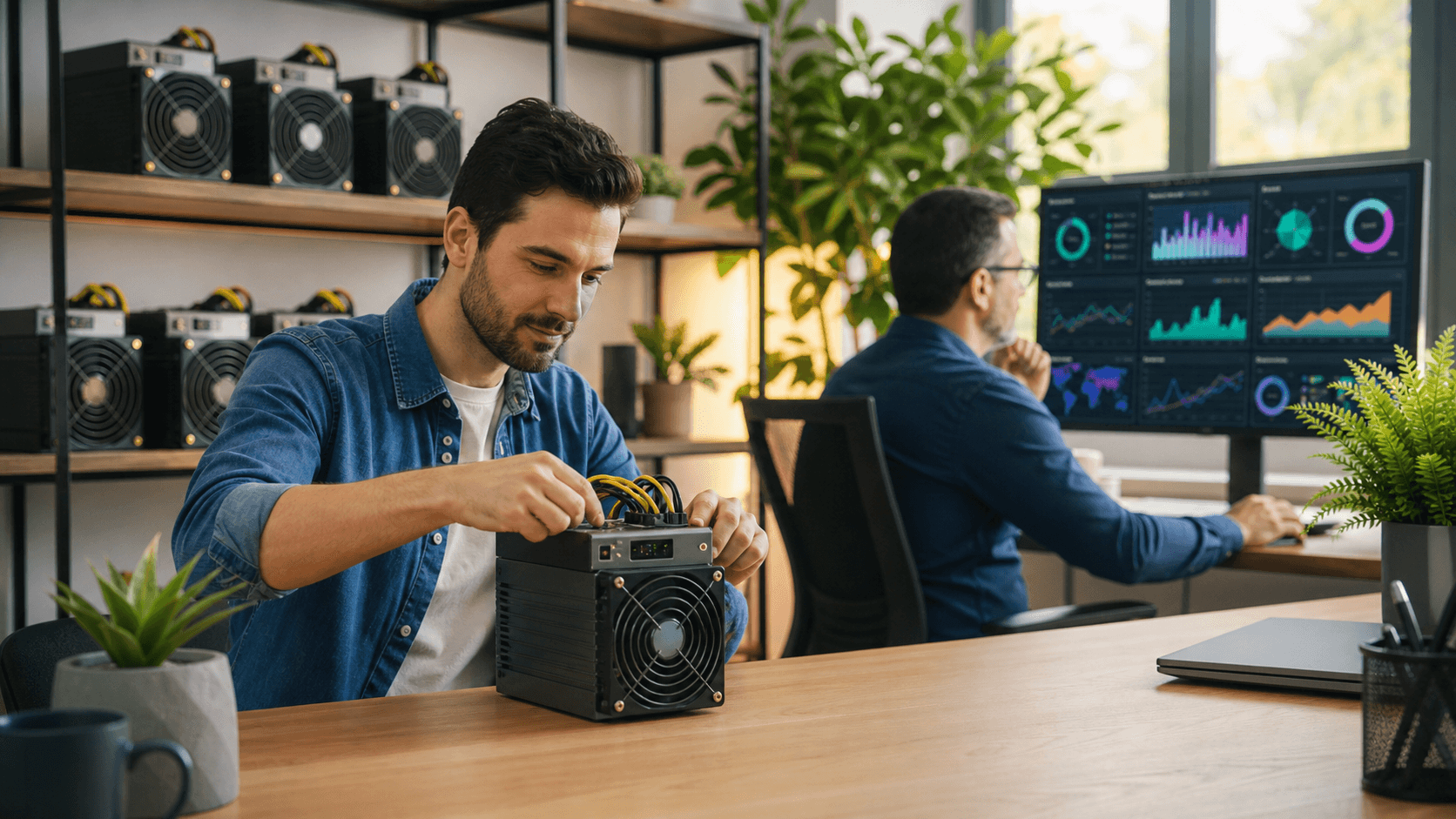
When we say "Bitcoin lottery miner," we mean a compact, low‑power ASIC that mines solo or through a solo‑style pool where each miner still points to their own address. The odds are long, but if you win, you get the full block reward instead of a small pool share. Compared to full‑size commercial rigs, these devices are quieter, lower heat, and friendlier to apartments and home offices. They feel more like a hobby with upside than a full‑time operation.
From a buyer's standpoint, it helps to understand why people keep these miners running month-after-month even when the pure math looks rough. That same psychology is what makes lottery miners a good fit, or a bad fit, for different types of home miners.
How Human Psychology Powers the Lottery Miner Flywheel
A Bitcoin lottery miner taps into the same reward patterns as scratch tickets, poker nights, or rare loot drops in games. You know the odds aren't great, but your brain doesn't think in probability charts; it thinks in stories. The story is simple: any day could be the day.
Variable rewards keep people engaged:
- Every share your miner submits has a small chance to be the winning one
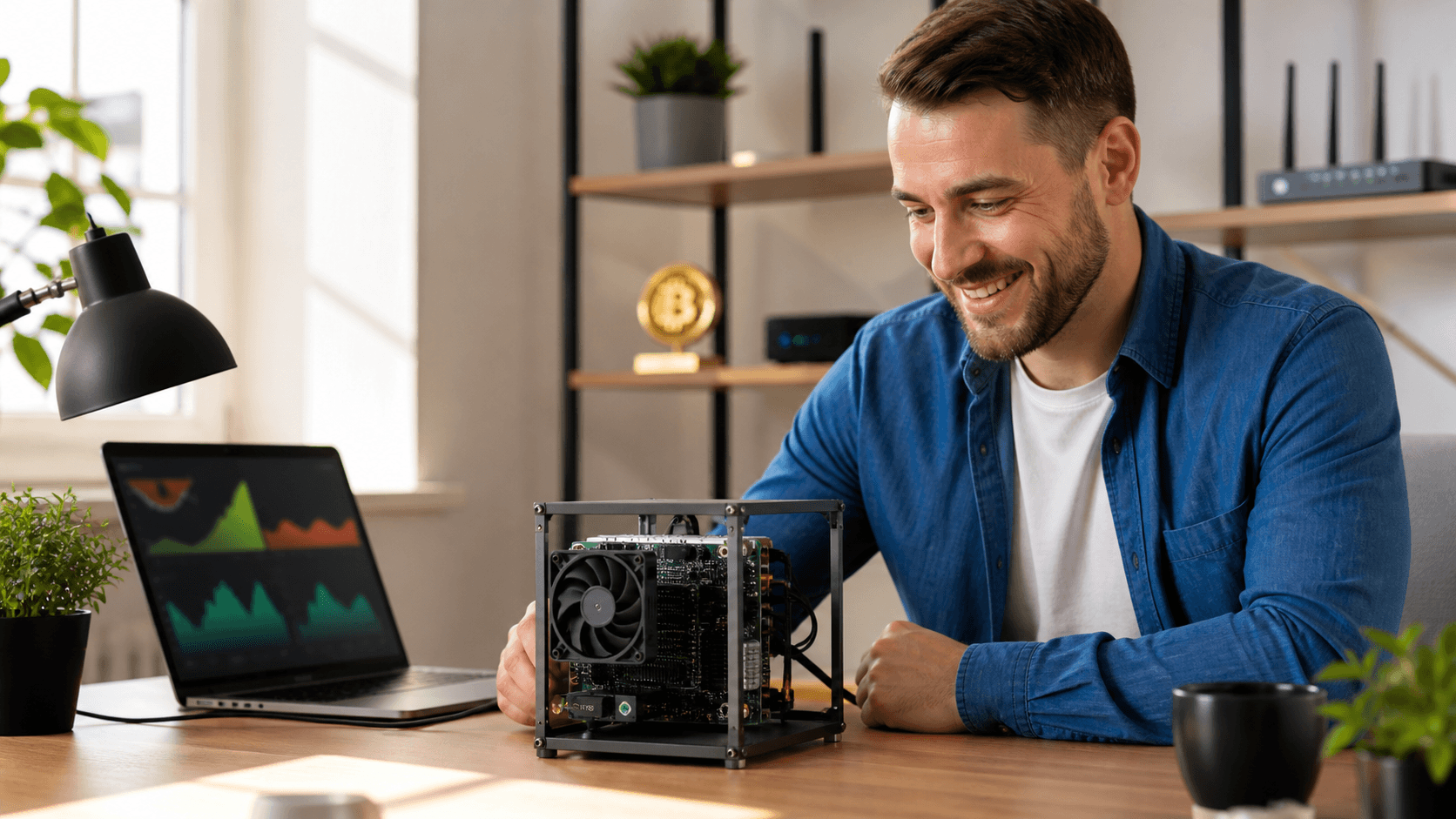
- The web dashboard on boards like Bitaxe or NerdQaxe‑style devices becomes a daily check‑in
- Seeing a higher‑than‑usual‑difficulty share feels like progress, even if it's not a full block
That regular ritual of checking stats, power draw, and temperatures builds a habit. The miner runs in the background, but your attention keeps coming back. You're not just chasing a reward; you're building a sense of ownership.
Once you own a miner, you have skin in the game. Bitcoin is no longer just a price chart; it's hardware on your desk, hash rate on a dashboard, and your address in a pool. When you point that miner to your own node or a solo pool, you see your contribution show up as part of the network. Even at 10 to 30 watts, there's real satisfaction in knowing you're participating directly.
For many home miners, the tinkering is half the fun:
- Tweaking clock speeds and voltages
- Watching power efficiency improve a few percent
- Flashing new firmware and testing features
Each small win, dropping temps, shaving a watt, stabilizing uptime, feels good. After a long workday, this kind of focused, hands‑on experiment can be more relaxing than scrolling a feed.
Community, Memes, and Why People Stick Through Bear Markets
Lottery mining is also sticky because of the community around it. Across Nostr, Telegram, and mining forums, people share screenshots of high‑difficulty shares, long uptime streaks, and those painful "almost hit" blocks. Over time, those screenshots turn into shared stories that other miners remember.
That social layer creates friendly competition:
- Public explorers where you can spot your address or worker name
- Small community contests like summer hash-rate challenges
- Seasonal runs where people use compact ASICs to offset heating in home offices
Seeing other home miners online with similar gear makes your own small board feel like part of something bigger. A simple PCB sitting on a shelf starts to feel like a badge of identity. It fits into the larger meme of "kitchen‑table hardware" standing alongside giant industrial farms. People like that story because it's reachable: one device, a regular outlet, and a bit of curiosity.
This connection makes it easier to mine right through bear markets. Many hobbyists mentally anchor the power cost to everyday expenses: if you can carry a couple of streaming subscriptions, you can often carry 20, 40 watts of mining. The spend becomes a mix of Bitcoin education, entertainment, and a low‑probability ticket that never expires.
For a lot of lottery miners, the emotional return beats short‑term financial return. There's a specific feeling in earning fresh coins straight from the protocol, even if the odds are long. The sound of the fan, the IP address in your router list, and the idea that your hashes are flowing into the network all keep you involved when price charts are ugly. Over time, that curious hobbyist often becomes "the Bitcoin person" in their friend group who can explain mining in plain English.
What This Means for Adoption, and How to Choose a Miner
From a network perspective, a global spread of small, independent miners and nodes makes Bitcoin harder to stop. One single home miner doesn't move the needle much, but thousands of small rigs spread across apartments, dorms, and houses do add up. Industrial farms and home setups can coexist, each doing what they're good at.
For individuals, lottery‑style miners dramatically lower the barrier to getting real hands‑on experience with Bitcoin. You don't need a garage, 220V power, or a dedicated breaker panel. A quiet board at low power can run off a standard outlet in a small room with basic airflow. Once you've configured one from scratch, it becomes much harder for mining‑related scams and hype to fool you. You understand where coins actually come from and what "hash rate" and "difficulty" mean in practice.
When you're choosing a Bitcoin lottery miner, focus on a few practical questions:
- Are you mainly curious and new, or do you like to mod and tune hardware?
- How much space, noise, and heat can your room realistically handle?
- Do you want a single ultra‑efficient board, or a small cluster that you can scale up later?
- Do you prefer fully open‑source hardware and firmware, or a more plug‑and‑play experience?
Compact boards in the Bitaxe and NerdQaxe category typically win on low power draw and modest noise compared to older, larger ASICs that were never designed for a bedroom or office. For most homes, a quiet 10, 30 W-class board on a shelf is much more comfortable than a full‑size multi‑hundred‑watt unit in a closet.
Recommended Supporting Gear and Upgrades
To get a stable, safe setup, plan your supporting gear along with the miner itself:
- Power supply: Use a solid, appropriately‑rated PSU with some headroom above your expected draw. For a single low‑power board, that often means a quality 12 V supply or an ATX power supply rated at least 30, 50% above your miner's maximum wattage. This gives you room to experiment with higher clocks without stressing the PSU.
- Cabling and safety: Avoid weak power strips, overloaded outlet splitters, and stacking cheap adapters. Use properly rated cables, keep connections snug, and don't daisy‑chain extension cords. Treat it like a small server, not a phone charger.
- Cooling and airflow: Most compact lottery miners run fine with simple cooling. Aim airflow along the board, not into a closed cabinet. A basic 120 mm fan, USB fan, or quiet PC case fan positioned to move air across the heatsink is often enough. If your room is warm or you push higher clocks, consider adding a second fan or directing airflow toward an open doorway or vent.
- Networking: For solo or solo‑pool setups, a stable connection matters more than raw speed. A wired Ethernet connection is ideal. If you must use Wi‑Fi, choose a strong, reliable signal and avoid placing the miner at the edge of coverage.
As you gain experience, common upgrade paths include:
- Moving from a single board to a small cluster on a dedicated shelf or rack
- Shifting from pure lottery mining to a mix of solo and regular pool mining for more predictable sats
- Bringing the miner closer to your home node or running your own node so you can connect directly and reduce reliance on third‑party services
The key is matching your hardware to your goals. If your priority is predictable income, small lottery miners are usually not the right tool; dollar-cost averaging into Bitcoin or using larger, more efficient ASICs in an appropriate environment will make more sense. If your priority is learning, hands‑on fun, participation in the network, and a small chance at a full block, a lottery miner fits very well.
Real‑World FAQ From Home Lottery Miners
Is a Bitcoin Lottery Miner Worth It If I Never Hit a Block?
For many hobbyists, yes, if you treat it as a mix of education, experimentation, and entertainment. The odds of a single small miner finding a block are very low, so you shouldn't rely on it for steady profit. If your main goal is to understand mining from the inside and stay involved with Bitcoin long‑term, it can be worth the cost.
How Loud and Hot Are These Compact Miners in a Normal Home?
Most compact boards run closer to a quiet desktop PC than a high‑end gaming rig. At low to mid power, they usually sit comfortably on a desk or shelf in a home office. As long as the room has normal airflow and the miner isn't inside a closed cabinet, temperatures stay manageable. If you're very sensitive to noise, look for devices and fan setups rated for low dBA and plan to run them at the lower end of their wattage range.
What Happens If Network Difficulty or Bitcoin Price Changes?
When difficulty increases, your odds of finding a block with the same hash rate go down. When Bitcoin's price rises, the potential value of a block reward in your local currency goes up. Both numbers move around constantly, so most home miners think in years, not weeks. They focus on learning, staying plugged into the network, and viewing any potential block as long‑shot upside.
Can I Mine Directly to My Own Wallet or Node?
Yes. Many hobby‑class miners support pointing directly to solo pools that pay out to your wallet address, and advanced users can mine against their own node or pool instance. If you're just starting, it's reasonable to begin with a simple solo pool setup and then move step by step toward running your own node and more advanced configurations as your confidence grows.
What Accessories Should I Plan for on Day One?
At minimum, plan for a properly sized power supply, decent cabling, a basic fan or two for airflow, and either a wired Ethernet run or a strong Wi‑Fi connection. If you think you'll expand to multiple boards, consider a small rack or shelf, a slightly larger PSU with multiple outputs, and a simple power meter so you can track real‑world wattage.
Ready to Start Lottery Mining?
If you're looking for a low‑power way to participate in Bitcoin, learn the basics of mining, and keep a small chance at a full block on your desk, a compact lottery miner is a good fit. Start by matching your budget, noise tolerance, and tinkering level to the right class of hardware, then pair it with a solid power supply, simple cooling, and a stable connection.
Once you're clear on those basics, choose a miner that fits your environment, add the recommended accessories, and get your first hashes online. The fastest way to learn is to plug in real hardware, pick your setup, and place your order so you can start mining from home on your own terms.
Start Mining With Purpose And Real Potential Today
If you are ready to turn curiosity into action, our bitcoin lottery miner is a practical way to participate in the Bitcoin network from home. At Saber Shore, we focus on tools that are straightforward to set up and run so you can spend more time learning and less time troubleshooting. If you have questions about suitability, setup, or strategy, contact us and we will help you evaluate your next steps.