Why Tiny Bitcoin Miners Matter for Home Setups
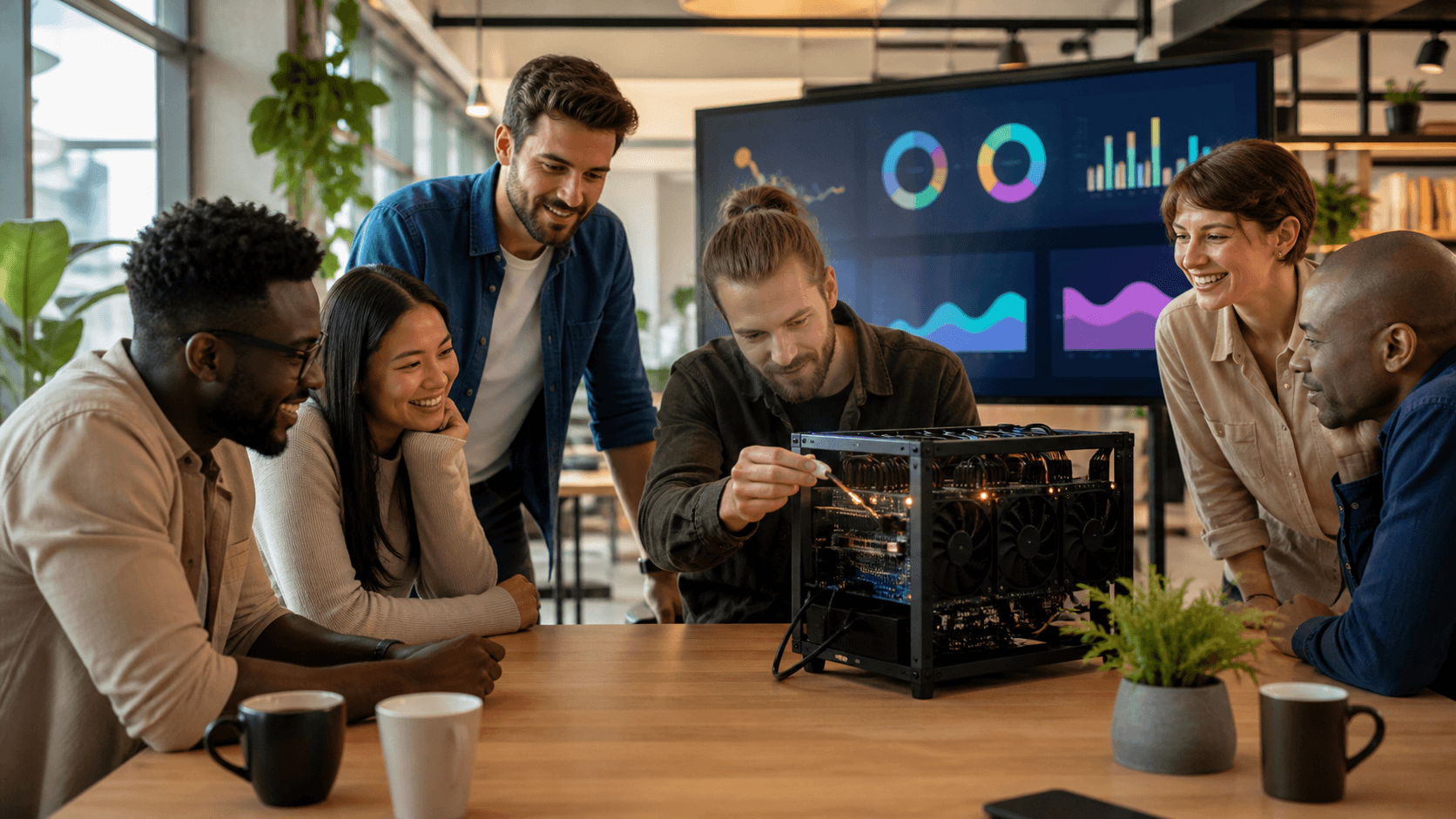
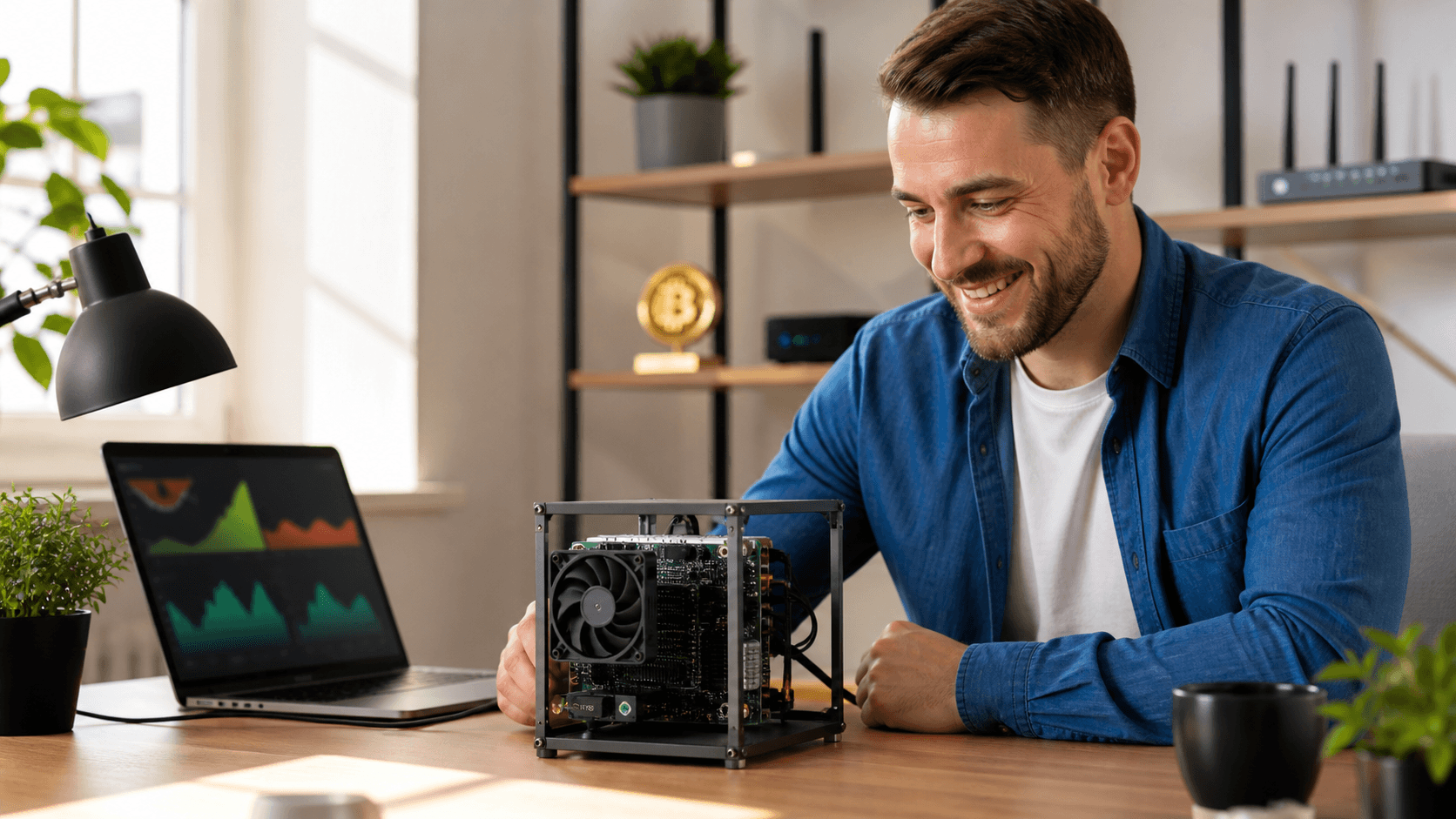
Home Bitcoin mining doesn't have to mean warehouse noise and 240V circuits. Compact lottery-style miners and small ASIC boards let you mine from a normal outlet in a house, apartment, office, or cabin.
Quick next step: If you already know you want a quiet, low-power miner, scroll down to the comparison table and budget recommendations to pick the right board style for your setup.
These tiny miners use very little power, run quietly on a shelf, and give you a real, though very small, chance of finding a block. More importantly, they're excellent for learning, self-custody, and decentralization.
Large industrial farms still provide most of the network hashrate, but solo and lottery-style miners create a healthier base layer of distributed, independent users. In this guide, we'll walk through:
- Pool vs solo vs lottery mining in plain English
- How tiny miners support decentralization
- How difficulty trends affect hobby mining
- How to choose between Bitaxe-style, NerdQaxe-style, and small ASIC miners
- Which options are "best for" each budget and use case
At the end, you'll know exactly which class of miner makes sense for your goals, and what power and cooling gear you'll want alongside it.
From Warehouse Rigs to Pocket Miners
Bitcoin mining hardware has evolved in clear stages:
- CPUs in regular PCs
- GPUs for higher hashrate
- Large ASIC boxes that can fill a room
- Compact ASIC-based boards like Bitaxe- and NerdQaxe-style miners for desks and shelves
Each step has chased more Hashrate Per Watt, more work for the same electricity. That same logic is why most miners use pools: pooling your hashrate with others gives you small, steady payouts instead of waiting years for a single block.
So why are solo and lottery-style miners getting attention again?
- Low-power gear is cheap to run for learning and fun
- Open-source firmware and web UIs are getting smoother
- Single-board controllers can now run a full miner
- Many miners care about decentralization and sovereignty, not just ROI
As block rewards shrink and fees become a bigger part of miner income, hobbyists often shift away from pure profit and toward:
- Education
- Privacy and self-custody
- Supporting the network
- Keeping a small but real chance of a lucky block
Pools vs. Solo vs. Lottery Miners
Here's how the payout models differ in practice:
- Pool Mining
You point your hashrate to a pool server. When the pool finds a block, you get a slice based on how much work you contributed.
- Pros: More predictable, frequent payouts
- Cons: You rely on the pool operator's rules and uptime
- Classic Solo Mining
You mine to your own node or solo endpoint. If you find a block, you keep the full reward. With small hashrate, this is extremely rare.
- Pros: Full control, full reward if you hit
- Cons: Odds are so low for home gear that you may never see a block
- Lottery-Style Solo Mining
Very low-power boards that run 24/7 and point at a solo endpoint. They're designed as "set-and-forget" miners, more like long-term lottery tickets than paychecks.
- Pros: Very low power cost, quiet, simple to live with
- Cons: Expected payout is near zero; it's about participation, not income
As network difficulty rises and total hashrate grows, the expected time for a single small miner to find a block stretches far beyond a normal mining "career." That's why many home miners use a mix:
- A Small, Efficient ASIC on a pool for steady sats
- A Lottery-Style Board pointing at a solo endpoint for decentralization and the chance of a lucky hit
Our usual guidance:
- Brand New, Tight Budget, Mainly Curious: Start with a lottery-style board.
- Already Know the Basics and Care About Payouts: Add or start with a small ASIC on a pool and keep a lottery board on the side.
How Lottery Miners Aid Decentralization (and Where Difficulty Fits in)
Decentralization isn't a slogan; it's concrete:
- Many independent full nodes
- Hashrate spread across many operators and geographies
- Less reliance on a few large industrial farms
Home and hobby miners help by running their own hashrate in homes, offices, and small off-grid setups. A single tiny board does not move the network by itself, but thousands of them do.
Lottery-style miners contribute because they:
- Are cheap to keep powered on
- Encourage users to run nodes, manage wallets, and self-custody rewards
- Gradually shift a small share of hashrate away from large providers
When you point a lottery miner at your own node, or a smaller, independent solo endpoint, you're not just chasing a payout. You're choosing which blocks and rules you accept.
Difficulty and Hobby Miners
Bitcoin's difficulty adjusts roughly every two weeks to keep average block time near 10 minutes. When big operators shut down older gear during tight margins:
- Difficulty can soften slightly
- Power-efficient small ASICs and low-power boards may get a little more breathing room
For strictly ROI-focused ASICs, what matters is Power Price and Efficiency (J/TH). For lottery miners, the main "costs" are learning time plus a small power draw, usually measured in watts, not kilowatts.
In practice, small miners are best treated as:
- Education tools for understanding blocks, shares, and nodes
- Personal sovereignty tools for running your own slice of hashrate
- Low-pressure lottery tickets using spare watts
Comparing Popular Bitcoin Lottery and Small Home Miners
Below we compare typical compact miners we work with at Saber Shore, using representative specs from common Bitaxe-style, NerdQaxe-style, and small ASIC units. Exact numbers vary by model, but the roles and tradeoffs are consistent.
We'll compare each class on:
- Hashrate
- Electricity use
- Noise
- Cooling needs
- Connectivity
- Setup difficulty
- Ideal user
Miner Class
Approx. Hashrate
Power Use
Noise & Cooling
Connectivity
Setup Difficulty
Best For
Entry Bitaxe‑style Lottery Board
Very low (tens of GH/s range, model‑dependent)
Single‑digit to low‑double‑digit watts (less than a small light bulb)
Quiet small fan; simple airflow on a shelf is usually enough
Wi‑Fi, onboard web UI
Easy: plug PSU, join Wi‑Fi, set pool/solo endpoint
First‑time miners, STEM demos, quiet apartment/office use
Higher‑End Bitaxe‑style Lottery Board
Low, mid range for lottery boards (more GH/s, sometimes approaching small fractions of TH/s)
Modest watt draw, still far under any full‑size ASIC
Slightly louder fan(s) under load; still desk‑friendly with open airflow
Wi‑Fi and/or Ethernet, web UI, more tuning options
Easy, moderate: same basics, plus more firmware/tuning features to explore
Hobbyists who want more hashrate in this class and room to tinker
NerdQaxe‑style Lottery Board
Similar range to higher‑end Bitaxe‑style boards (varies by exact chip and firmware)
Comparable modest watt draw
Desk‑friendly fans; may benefit from a stand or case for airflow
Wi‑Fi and/or Ethernet; open‑source firmware flavor
Moderate: ideal for users who enjoy firmware tweaks and customization
Tinkerers who want an open, tweakable platform
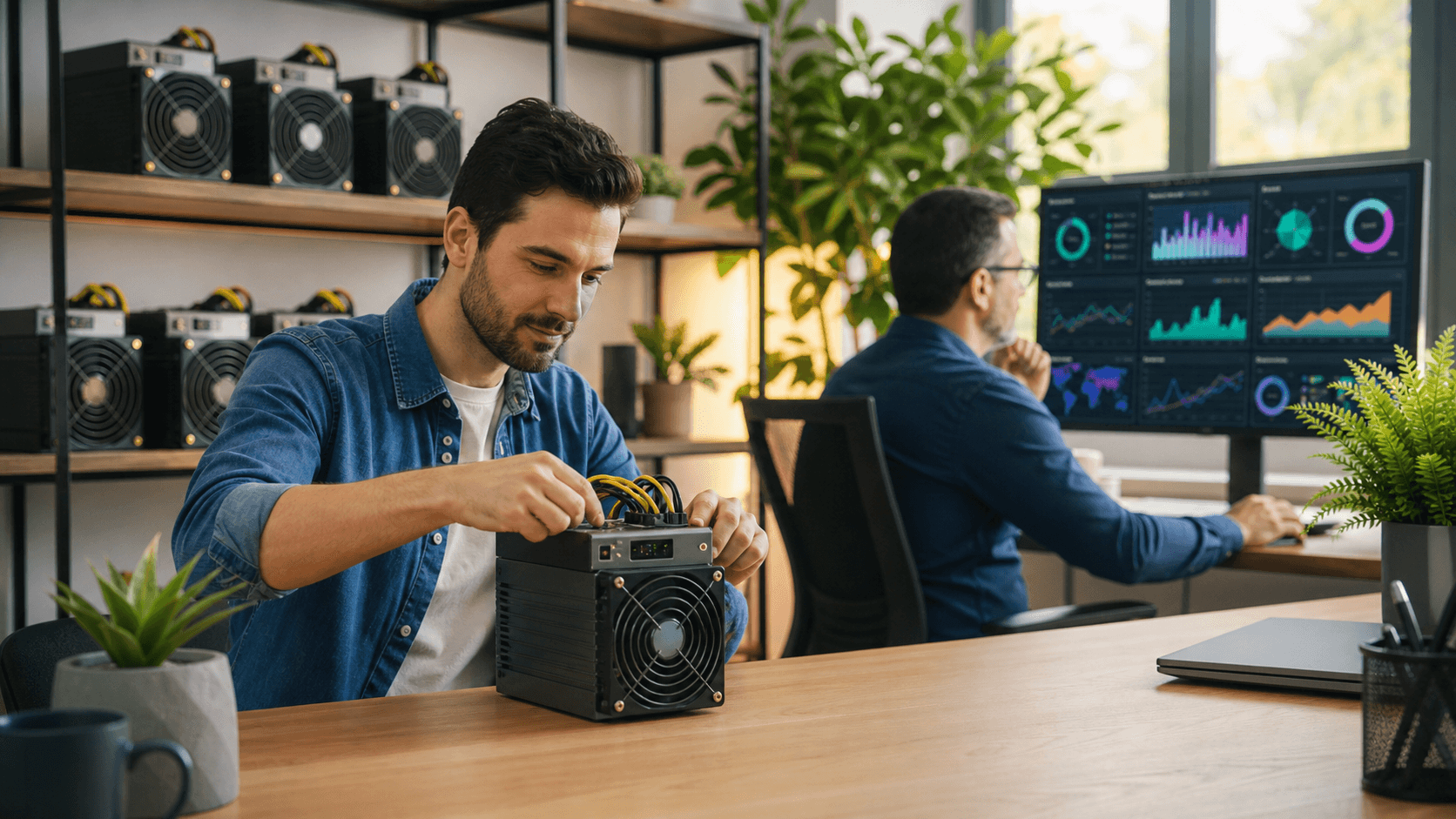
Small Standalone ASIC for Pool Mining
Much higher (tens of TH/s range for many compact units)
Hundreds to over a thousand watts, model‑dependent
Noticeably louder; often best in a garage, spare room, or enclosed box with ducting
Ethernet, pool‑style web UI or control software
Moderate: needs proper PSU, 120/240V planning, and better cooling
Users who want steady pool payouts and can handle more noise and power use
How to Read This Table:
- Hashrate: Higher hashrate means more work on the network and better odds of earning, but usually more power and noise.
- Electricity Use: Lottery boards are measured in watts, small ASICs in hundreds or more watts. Always consider your local power price.
- Noise & Cooling: Desk miners can live in a bedroom/office. Small ASICs usually need a separate space and better airflow.
- Connectivity: Wi‑Fi is convenient; Ethernet is more stable. If you can run a cable, do it.
- Setup Difficulty: Most modern boards are browser‑configured. ASICs add power, noise, and airflow planning.
- Ideal User: Choose based on whether you care more about learning and decentralization, or recurring payouts.
Call to action: If you know you want a low‑power lottery board, start with an entry or higher‑end Bitaxe‑style unit plus a quality PSU. If you want pool income, look at a small ASIC and pair it with a lottery board for solo mining on the side.
Best‑For Recommendations by Budget and Use Case
Below are practical profiles to help you decide which class of miner makes sense. When you browse Saber Shore hardware, match your situation to one of these.
1. Under a Modest Budget, "Just Curious" Home Miner
- Recommended Hardware Class: Entry Bitaxe‑style or similar lottery board
- Hashrate: Enough to see real shares and statistics, but not for reliable income
- Electricity Use: Comparable to a small LED desk lamp
- Noise: Quiet enough for a desk or shelf
- Cooling: Built‑in fan, just keep it in open air
- Connectivity: Wi‑Fi setup through a web interface
- Setup Difficulty: Beginner‑friendly
- Ideal for:
- Learning how mining works
- STEM projects
- "Live Bitcoin sign" on your desk
Suggested accessories/upgrades:
- Simple, high‑quality USB‑PD adapter or small 80+ Gold PC PSU with margin above the miner's watt draw
- Basic stand or case to prevent accidental cable pulls and to help airflow
2. Mid Budget, Hobby Miner Who Wants More Hashrate (but Still Quiet)
- Recommended Hardware Class: Higher‑end Bitaxe‑style or NerdQaxe‑style lottery board
- Hashrate: Noticeably more within the lottery class (still small vs full ASICs)
- Electricity Use: Higher than entry boards but still low compared to any pool ASIC
- Noise: Slightly more fan noise at higher clocks; suitable for office or living spaces with some background noise
- Cooling: Benefits from open placement or a small desktop fan if overclocked
- Connectivity: Wi‑Fi or Ethernet depending on model
- Setup Difficulty: Easy to moderate; more tuning and firmware options
- Ideal for:
- Users who want to keep a board running 24/7
- People comfortable exploring firmware and overclock/undervolt settings
- Small off‑grid or solar experiments
Suggested accessories/upgrades:
- Quiet 80+ Gold or Platinum PC PSU with enough headroom
- Surge protector or UPS if your local grid is unstable
- Optional: Raspberry Pi or small PC to run a personal Bitcoin node as a next‑step upgrade
3. Higher Budget, Semi‑serious Home Miner Chasing Steady Sats
- Recommended Hardware Class:
- One small standalone ASIC for pool mining Plus
- One lottery‑style board for solo/lottery mining
- Hashrate: Small ASIC delivers the bulk of your hashrate (and pool income); lottery board adds a low‑power solo stream
- Electricity Use: Plan on hundreds of watts or more for the ASIC, plus the small extra draw from the lottery board
- Noise: ASIC is loud; typically lives in a garage, utility room, or sound‑managed enclosure
- Cooling: Needs clear intake/exhaust, possibly ducting or a dedicated mining box
- Connectivity: Ethernet strongly recommended for the ASIC; Wi‑Fi or Ethernet for the lottery board
- Setup Difficulty: Moderate; you'll need to think about circuit capacity, wiring, and ambient temperatures
- Ideal for:
- Users with lower power rates or dedicated circuits
- People who want ongoing pool payouts while still supporting decentralization with a solo miner
Suggested accessories/upgrades:
- Correct‑rated PSU (or integrated PSU unit) for the ASIC with plenty of overhead
- Sound‑dampening or ducting solution to manage noise and outlet temperatures
- Dedicated Ethernet run or small network switch to keep miners off congested Wi‑Fi
- Full Bitcoin node on a small PC if you want full control over your solo mining endpoint
Call to action: Decide which budget tier fits you, then choose a matching class of miner. If you're on the fence, a higher‑end lottery board is usually the safest first buy; you can always add a small ASIC later.
Power, Noise, and Network Basics
Regardless of which miner you choose:
- Power:
- Always leave headroom between miner watt draw and PSU rating (aim for 50 to 70% of PSU capacity in normal use)
- Use quality USB‑PD adapters or PC PSUs; unstable power causes random restarts and corrupted SD cards
- In areas with frequent storms or brownouts, a surge protector or small UPS is worth the cost
- Noise & Cooling:
- Keep in open air; don't box a miner into a tight shelf or cabinet
- For small ASICs, consider a dedicated space and, if needed, a sound‑dampened enclosure with directed airflow
- Network:
- Wi‑Fi is fine for lottery boards; if you see frequent disconnects, switch to Ethernet
- For ASICs, use Ethernet from day one; it's more stable for long‑term 24/7 operation
FAQ: Real Questions From New Lottery Miner Buyers
What Are My Real Chances of Finding a Block with a Lottery Miner?
With a single low‑power board, the odds are very low. Think of it as a slow, ongoing lottery; your expected payout is close to zero, but your chance is not zero. Most owners value the education and participation more than the expected income.
Can I Actually Make Money with One Small Lottery Board?
It's possible, but you should not plan on it. Any block you eventually find is a bonus, not a business plan. Many users run these miners on power they'd pay for anyway (home office, lab, or small solar), where that's allowed.
Will My Small Miner Be Obsolete After the Next Difficulty Jump?
From a pure ROI standpoint, older and weaker gear becomes less competitive over time. As a learning tool and decentralization tool, however, these boards remain useful long after large farms upgrade to newer chips.
Do I Need to Run a Full Bitcoin Node for a Lottery Miner?
You don't have to, but it's one of the best upgrades you can make. Many compact miners can be pointed at:
- Your own node (running on a small PC or single‑board computer), or
- A trusted third‑party solo endpoint
Running your own node gives you full control over which blocks and rules you accept.
How Loud Are These Miners Really?
- Lottery boards are generally comparable to a small router or quiet USB fan. Many users keep them on a desk.
- Small ASICs are much louder, often in the range of a vacuum cleaner at close distance, and are better placed in a separate room with thought‑out airflow.
What If the Hardware Fails?
Most issues trace back to power and cooling. Before assuming a board is dead, check:
- PSU wattage and cable quality
- Fan operation and dust buildup
- Firmware settings, clock speeds, and logs
At Saber Shore, we back our miners with a 6‑month warranty and walk customers through basic troubleshooting steps before we replace or repair a board.
Final Call to Action
If you want to mine at home without turning your living room into a server hall, start by choosing the right size of miner for your budget and noise tolerance.
- Pick an Entry or Higher‑end Lottery Board if you care most about learning, privacy, and decentralization.
- Add a Small ASIC if you're ready for more hashrate and steady pool payouts.
Once you've matched your budget and goals to a miner class, pair it with a solid PSU and basic cooling. Then place your order and get your first hashes online.
Ready to start? Choose your lottery board or small ASIC, add a compatible power supply and basic accessories, and complete your purchase to bring Bitcoin mining into your home on your terms.
Unlock Consistent Bitcoin Mining Power Today
If you are ready to turn curiosity into actual hashing power, our bitcoin lottery miner is built to help you participate in the network with confidence. At Saber Shore, we focus on reliable hardware that is simple to set up and straightforward to run. Whether you are just getting started or expanding your setup, we can help you choose the right configuration for your goals. Have questions before you commit? Just contact us and we will walk you through your options.